
Boy with a Plaster Heart in an Art Studio
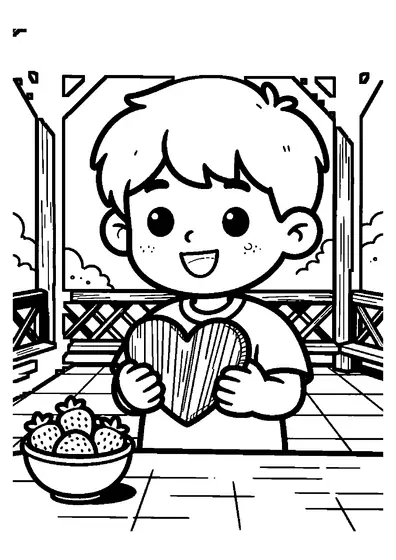
A young artist holds a heart-shaped plaster sculpture while working in an art studio.

A4 format (portrait), black outlines on a white background · for home and classroom use
All coloring pages: Mother's Day Coloring Pages
Similar coloring pages: Mother's Day Coloring Pages



What else can you print? Free, no account needed
Custom Name Coloring Pages
Enter your child's name to generate a custom coloring page featuring large outline letters to color and decorate.
Open generator →Connect the Dots Generator
Eight connect-the-dots pictures across three difficulty levels. Features faint outline guides for younger children and dots only for older kids.
Open generator →Printables
Worksheets, tracing lines, mazes and dot-to-dots in A4.
Browse printables →
A Boy Creating a Plaster Heart in the Studio
The boy presents a heart sculpture he has made in a room devoted to art. The plaster form turns a familiar symbol of affection into a solid handmade object, suitable as a personal gift for his mom. The studio setting connects the finished heart with the creative process behind a Mother’s Day project.
How Plaster Changes from Powder to Sculpture
Art plaster begins as a fine powder that is mixed with water to form a pourable or moldable material. As it sets, a chemical reaction causes it to become firm and warm before it cools. Once fully dry, a plaster piece can be carefully painted, but moisture may weaken or stain its porous surface.
Realistic Colors for the Plaster Artwork
- Unpainted plaster heart: matte white or warm off-white
- Painted heart: commonly red or pink, though art paint can be any color
- Dried plaster mixture: white, ivory, or very pale gray
- Artist’s clothing: any everyday fabric color
- Studio table or work surface: natural wood brown, white, gray, or another practical finish