
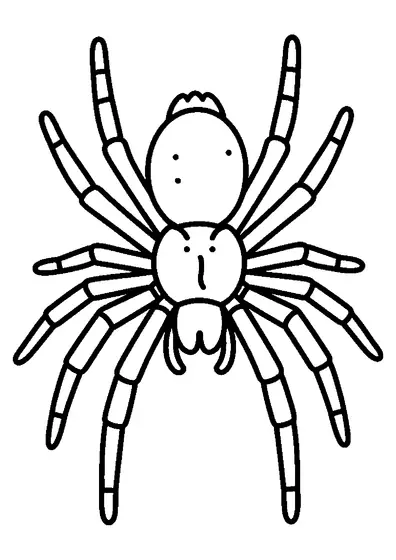
Tarantula Seen from Above
A prominent tarantula displays its broad stance and hairy abdomen in a top-down view.

A4 format (landscape), black outlines on a white background · for home and classroom use
All coloring pages: Halloween Coloring Pages
Similar coloring pages: Halloween Coloring Pages



What else can you print? Free, no account needed
Custom Name Coloring Pages
Enter your child's name to generate a custom coloring page featuring large outline letters to color and decorate.
Open generator →Connect the Dots Generator
Eight connect-the-dots pictures across three difficulty levels. Features faint outline guides for younger children and dots only for older kids.
Open generator →Printables
Worksheets, tracing lines, mazes and dot-to-dots in A4.
Browse printables →
Top-Down View of a Hairy Tarantula
Viewed directly from above, this large tarantula spreads its eight legs outward around its body. Its oval abdomen is covered in fine hair, presenting the full symmetrical silhouette of this robust arachnid.
Characteristics and Defensive Hairs of Tarantulas
Tarantulas are among the largest spiders in the world, relying on their strong legs and sensitive sensory hairs rather than silk webs to navigate their environment. Many New World tarantulas possess urticating hairs on their abdomen, which they can brush off with their hind legs when threatened. These tiny barbed bristles cause mild irritation to potential predators, helping the spider retreat safely.
Natural Colors of Tarantulas
- Abdomen hairs: Dark brown, black, rust-red, or copper-orange depending on species
- Leg segments: Deep chocolate brown to black, sometimes with pink or red joints
- Carapace: Dark matte brown or grayish-black tone
- Chelicerae: Glossy black or dark charcoal finish