
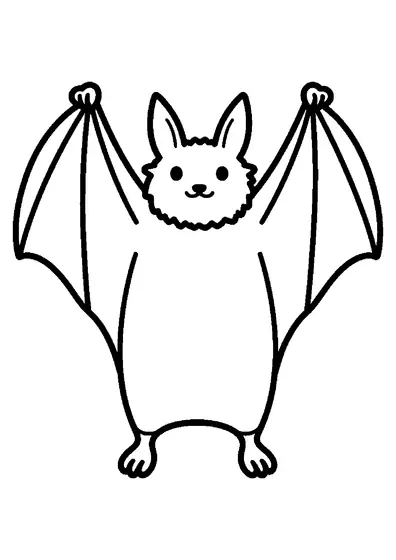
Side-View Flying Bat
A side profile of a bat in mid-flight reveals the delicate wing structure and distinct facial features of nocturnal animals.

A4 format (landscape), black outlines on a white background · for home and classroom use
All coloring pages: Halloween Coloring Pages
Similar coloring pages: Halloween Coloring Pages


What else can you print? Free, no account needed
Custom Name Coloring Pages
Enter your child's name to generate a custom coloring page featuring large outline letters to color and decorate.
Open generator →Connect the Dots Generator
Eight connect-the-dots pictures across three difficulty levels. Features faint outline guides for younger children and dots only for older kids.
Open generator →Printables
Worksheets, tracing lines, mazes and dot-to-dots in A4.
Browse printables →
Profile of a Flying Bat
A profile view highlights the elongated snout and delicate wing membrane characteristic of flying bats. Seeing a bat from the side gives a clear perspective on how its wing connects along the torso down toward the hind legs.
Anatomical Adaptations for Night Flight
The elongated snout of many bat species houses specialized nasal structures that help direct echolocation calls. Additionally, bat wings consist of an extremely thin skin membrane that heals rapidly if minor tears occur during flight.
Real World Colors of Microbats
- Short body fur: medium brown, reddish chestnut, or dark gray
- Membranous wings: dark charcoal or semi-translucent dark brown
- Facial snout: warm tan or pinkish brown
- Claws and wing joints: muted pale brown or beige