
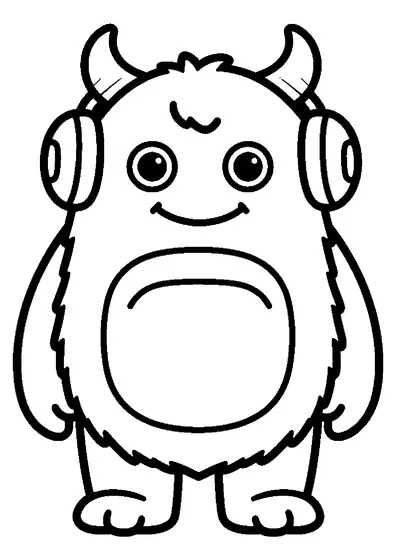
Monster Holding a Giant Feather
A friendly creature with two tiny horns holds a soft, oversized plume in its paw.

A4 format (portrait), black outlines on a white background · for home and classroom use
All coloring pages: Ghost Coloring Pages
Similar coloring pages: Ghost Coloring Pages


What else can you print? Free, no account needed
Custom Name Coloring Pages
Enter your child's name to generate a custom coloring page featuring large outline letters to color and decorate.
Open generator →Connect the Dots Generator
Eight connect-the-dots pictures across three difficulty levels. Features faint outline guides for younger children and dots only for older kids.
Open generator →Printables
Worksheets, tracing lines, mazes and dot-to-dots in A4.
Browse printables →
A Cheerful Horned Creature with a Fluffy Plume
Standing in the center of the scene, a happy little monster smiles broadly while displaying two small horns on top of its head. It carries a single massive feather in one hand, featuring a round belly and a playful expression. The background remains completely open and uncluttered around the solitary character.
Fascinating Facts About Feathers and Birds
Feathers are made of keratin, the exact same protein found in human fingernails and hair. Birds use down feathers closest to their skin to trap air and stay warm during cold winter months, while larger flight feathers provide structure for soaring through the air.
Real-World Colors of Feathers and Creatures
- Bird feathers: Naturally occur in vibrant shades of blue, scarlet red, brilliant yellow, deep green, or iridescent purple
- Horns: Typically appear in neutral tones such as off-white, light gray, beige, or dark brown
- Monster skin: Fantasy creatures in stories can feature playful colors like bright turquoise, purple, lime green, or golden yellow