
Grandpa Reading a Newspaper at the Station
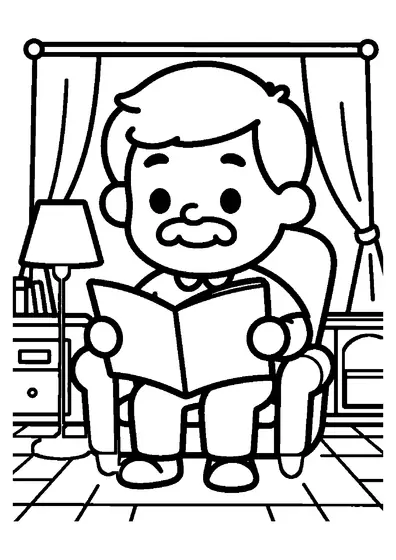
An elderly traveler spends time reading the daily news while waiting inside a railway station lounge.

A4 format (landscape), black outlines on a white background · for home and classroom use
All coloring pages: Grandparents Day Coloring Pages
Similar coloring pages: Grandparents Day Coloring Pages



What else can you print? Free, no account needed
Custom Name Coloring Pages
Enter your child's name to generate a custom coloring page featuring large outline letters to color and decorate.
Open generator →Connect the Dots Generator
Eight connect-the-dots pictures across three difficulty levels. Features faint outline guides for younger children and dots only for older kids.
Open generator →Printables
Worksheets, tracing lines, mazes and dot-to-dots in A4.
Browse printables →
Waiting Room at the Railway Station
The scene depicts a content grandfather relaxing in a train station waiting area while holding a folded newspaper. He passes time before his upcoming rail journey in a spacious indoor transit terminal.
Train Travel and Daily Newspapers
Train stations historically featured grand waiting rooms equipped with benches, clocks, and newsstands for long-distance passengers. Printed newspapers were once the primary way travelers received morning headlines during train journeys. Modern railway terminals continue to offer quiet seating zones where passengers rest before boarding.
Typical Colors of Train Stations and Newsprint
- Newspaper paper: light gray or off-white newsprint
- Grandpa's coat: navy blue, charcoal gray, or dark brown
- Station seating: dark wood, brushed steel, or maroon leather
- Station walls: beige, light brick red, or sandstone gray
- Eyeglass frames: gold metallic, tortoise shell, or black