
Grandpa and Grandson Repair an Old Wall Clock
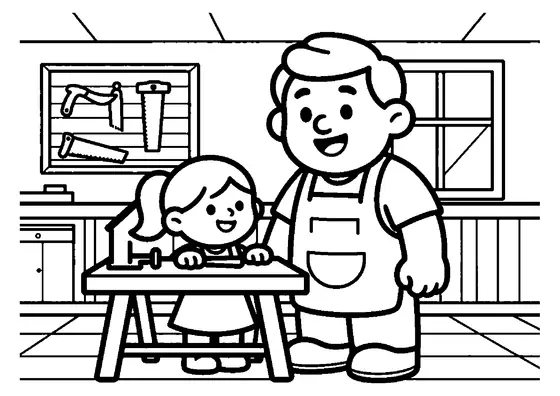
A grandfather and grandson spend time together in a workshop as they examine the inner mechanism of an old wooden wall clock.

A4 format (landscape), black outlines on a white background · for home and classroom use
All coloring pages: Grandparents Day Coloring Pages
Similar coloring pages: Grandparents Day Coloring Pages




What else can you print? Free, no account needed
Custom Name Coloring Pages
Enter your child's name to generate a custom coloring page featuring large outline letters to color and decorate.
Open generator →Connect the Dots Generator
Eight connect-the-dots pictures across three difficulty levels. Features faint outline guides for younger children and dots only for older kids.
Open generator →Printables
Worksheets, tracing lines, mazes and dot-to-dots in A4.
Browse printables →
Mechanical Wall Clocks and Family Workshop Time
A grandfather shares his technical knowledge with his grandson during a quiet afternoon in a home workshop. Together, they inspect an antique wooden wall clock, focusing on the intricate brass gears that make the timepiece tick.
Fascinating Facts About Mechanical Clocks
Traditional pendulum clocks rely on weight or springs combined with gear trains to measure time accurately without electricity. Before digital devices became common, households depended on trained craftspeople to clean and oil these delicate mechanical movements every few years. Learning how gears interact helps children understand fundamental concepts of physics and mechanical movement.
Natural Colors of Clock Parts
- Old wall clock cabinet: dark brown oak or rich walnut wood
- Internal clock gears: shiny gold brass or silver steel
- Clock dial face: off-white enamel with black Roman numerals
- Clock hands: dark black tempered steel