
Rail Handcar with Easter Egg Basket
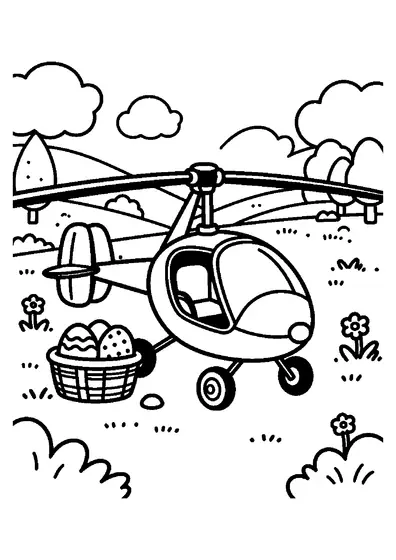
A small railway handcar resting on track rails holds a woven basket packed with decorated Easter eggs.

A4 format (landscape), black outlines on a white background · for home and classroom use
All coloring pages: Easter Coloring Pages
Similar coloring pages: Easter Coloring Pages



What else can you print? Free, no account needed
Custom Name Coloring Pages
Enter your child's name to generate a custom coloring page featuring large outline letters to color and decorate.
Open generator →Connect the Dots Generator
Eight connect-the-dots pictures across three difficulty levels. Features faint outline guides for younger children and dots only for older kids.
Open generator →Printables
Worksheets, tracing lines, mazes and dot-to-dots in A4.
Browse printables →
Railway Handcar Transporting an Easter Basket
This illustration showcases a manual railroad handcar carrying a basket of Easter eggs along a segment of steel track. The vehicle details its wooden platform, metal hand lever mechanism, and small flanged wheels resting on the rails. Railroad handcars relied entirely on human effort to move workers and equipment along train lines.
Historical Facts About Railroad Handcars
Railroad handcars were invented in the nineteenth century for track maintenance crews to inspect remote stretches of line without using a steam locomotive. Workers operated the vehicle by pumping a central wooden T-lever up and down, which drove the wheels via a gear and crankshaft mechanism. Although motorized maintenance vehicles eventually replaced handcars, they remain famous symbols of early railroad pioneering.
Real World Colors of Handcars and Easter Eggs
- Handcar wooden platform: Weathered brown timber or dark stained oak planks
- Metal lever and mechanism: Dark iron gray, black, or rusted steel
- Railroad track rails: Dull gray steel tops with rust-brown sides
- Woven Easter basket: Warm golden tan or light brown straw
- Easter egg shells: Decorated with varied shades of pink, yellow, mint green, and baby blue