
Little Lamb Beside a Wooden Post Mill
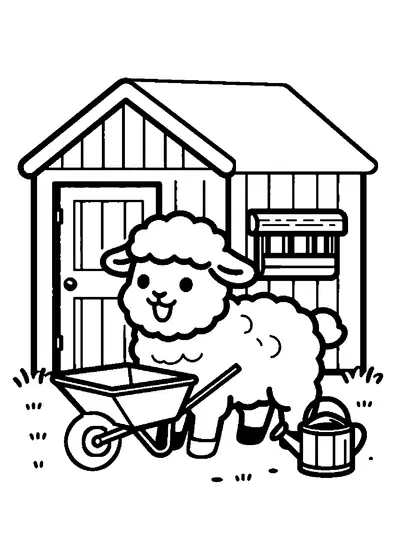
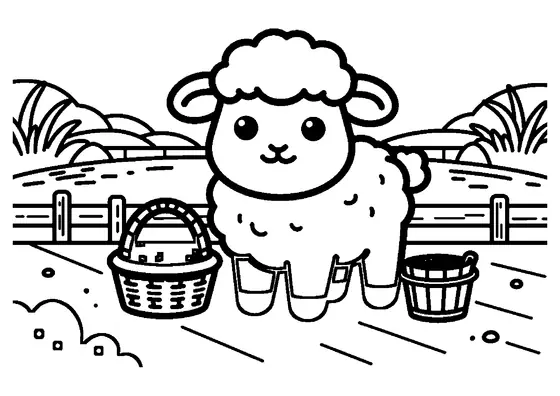
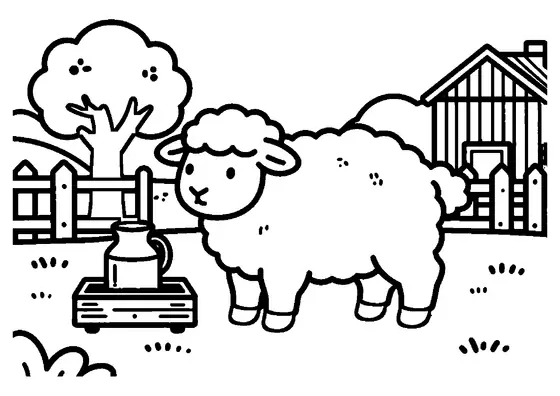
A fluffy young lamb stands on a spring hillside near a traditional wooden post mill.

A4 format (portrait), black outlines on a white background · for home and classroom use
All coloring pages: Easter Coloring Pages
Similar coloring pages: Easter Coloring Pages


What else can you print? Free, no account needed
Custom Name Coloring Pages
Enter your child's name to generate a custom coloring page featuring large outline letters to color and decorate.
Open generator →Connect the Dots Generator
Eight connect-the-dots pictures across three difficulty levels. Features faint outline guides for younger children and dots only for older kids.
Open generator →Printables
Worksheets, tracing lines, mazes and dot-to-dots in A4.
Browse printables →
What the hillside picture presents
The little lamb appears beside a wooden post mill on the hill. The scene brings together a young farm animal, an old type of wind-powered building, and a spring landscape closely associated with the Easter season.
Interesting facts about traditional post mills
A post mill is an early form of windmill whose main body can be turned around a large central post. This lets the miller face the sails toward the wind, which supplies the power needed to operate the machinery used for tasks such as grinding grain.
Colors found in the real world
- Lamb's fleece: creamy white, ivory, black, brown, gray, or spotted
- Lamb's face and legs: white, tan, brown, black, or soft pink where little fur is present
- Lamb's eyes: usually brown, amber, or nearly black
- Wooden mill: golden brown when newer, or dark brown and silvery gray after weathering
- Spring hillside: fresh green, yellow-green, or earthy brown where soil is exposed