
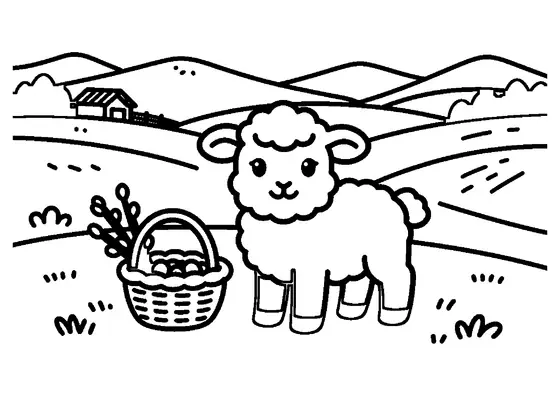
Lamb Under a Stone Bridge
A young lamb stands in a grassy meadow beside a woven basket and pussy willow branches under a stone bridge.

A4 format (landscape), black outlines on a white background · for home and classroom use
All coloring pages: Easter Coloring Pages
Similar coloring pages: Easter Coloring Pages


What else can you print? Free, no account needed
Custom Name Coloring Pages
Enter your child's name to generate a custom coloring page featuring large outline letters to color and decorate.
Open generator →Connect the Dots Generator
Eight connect-the-dots pictures across three difficulty levels. Features faint outline guides for younger children and dots only for older kids.
Open generator →Printables
Worksheets, tracing lines, mazes and dot-to-dots in A4.
Browse printables →
Rural Meadow Scene with a Young Lamb
A young lamb gathers in an open meadow beneath an arched stone bridge on a breezy spring day. The setting features a small basket and freshly cut pussy willow branches placed along the grassy pasture landscape.
Lambs and Architecture in Countryside Habitats
Stone arch bridges have been built across countryside streams for centuries using carefully fitted masonry blocks that withstand heavy moisture and wind. Young sheep raised in pastoral pastures rely on thick wool coats to stay warm during unpredictable spring weather.
Typical Colors of Pasture and Countryside Elements
- Young lamb fleece: Creamy white, soft beige, or pale ivory
- Pussy willow catkins: Silvery gray, soft white, and dark brown stems
- Masonry stone bridge: Weathered gray, charcoal, or mossy brown stone
- Meadow grass: Spring green, olive green, or yellowed straw
- Woven container basket: Natural willow brown, tan, or golden straw