
Easter Palm in a Monastery Herb Garden
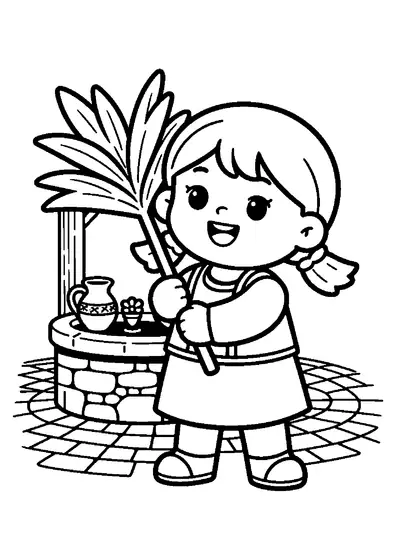
A girl holds a traditional palm branch while standing in a monastery garden filled with herbs.

A4 format (portrait), black outlines on a white background · for home and classroom use
All coloring pages: Easter Coloring Pages
Similar coloring pages: Easter Coloring Pages



What else can you print? Free, no account needed
Custom Name Coloring Pages
Enter your child's name to generate a custom coloring page featuring large outline letters to color and decorate.
Open generator →Connect the Dots Generator
Eight connect-the-dots pictures across three difficulty levels. Features faint outline guides for younger children and dots only for older kids.
Open generator →Printables
Worksheets, tracing lines, mazes and dot-to-dots in A4.
Browse printables →
Traditional Palm Display in a Monastery Garden
Monastery gardens have historically served as tranquil spaces dedicated to growing medicinal herbs, flowers, and vegetables. Bringing a handcrafted festive branch into a courtyard garden reflects centuries-old spring traditions preserved in monastic settings.
Monastic Herb Gardens and Floral Traditions
Monks and nuns cultivated specialized botanical beds during the Middle Ages to produce remedies and seasonings. Many plants grown in these spaces, such as sage, thyme, and lavender, were valued for both practical uses and symbolic meanings during religious festivals. Monastic gardens often included stone walkways and protective perimeter walls to shield delicate crops from strong winds.
Real Colors of Herbs and Handcrafted Palms
- Easter palm leaves: dried yellow straw, green boxwood twigs, and colorful woven paper ribbons
- Herb foliage: deep green, silver-gray, or vibrant lime shades
- Garden soil: dark brown or damp earth tones
- Monastery stone walls: warm beige, tan, or gray limestone