
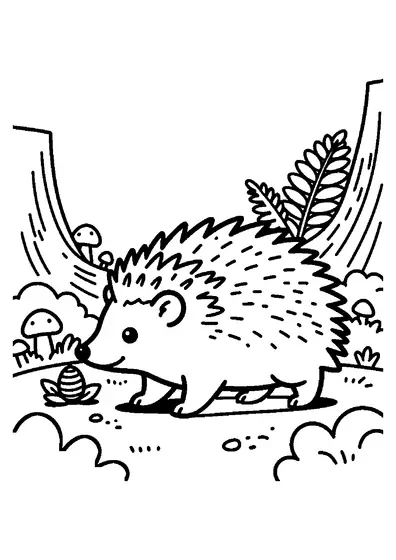
Easter Hare in a Woodland Clearing
A wild woodland hare sits quietly in a forest clearing next to a decorated egg and a sprig of pussy willow.

A4 format (portrait), black outlines on a white background · for home and classroom use
All coloring pages: Easter Coloring Pages
Similar coloring pages: Easter Coloring Pages



What else can you print? Free, no account needed
Custom Name Coloring Pages
Enter your child's name to generate a custom coloring page featuring large outline letters to color and decorate.
Open generator →Connect the Dots Generator
Eight connect-the-dots pictures across three difficulty levels. Features faint outline guides for younger children and dots only for older kids.
Open generator →Printables
Worksheets, tracing lines, mazes and dot-to-dots in A4.
Browse printables →
Wild Hares and Woodland Spring Settings
A woodland clearing surrounded by forest trees forms the habitat where a wild hare rests beside a decorated egg and a pussy willow branch. Wild hares inhabit open forest glades, relying on natural camouflage and keen senses to stay safe.
Natural History of Woodland Hares
Unlike domestic rabbits, European wild hares live entirely above ground in shallow depressions called forms rather than digging subterranean burrows. Wild hares can reach running speeds of up to forty-five miles per hour to evade woodland predators. Pussy willow branches produce soft, furry catkins in early spring before their green leaves emerge.
Real Colors of Forest Hares and Willow Branches
- hare fur: tawny brown, grayish brown, and buff cream on the underside
- hare ears and tips: light brown with distinct black tips on the upper edges
- pussy willow catkins: silvery gray soft fuzz on dark reddish-brown wooden twigs
- woodland ground foliage: moss green, fallen brown leaves, and dark forest soil
- decorated easter egg: bright painted patterns of cobalt blue, yellow, and magenta