
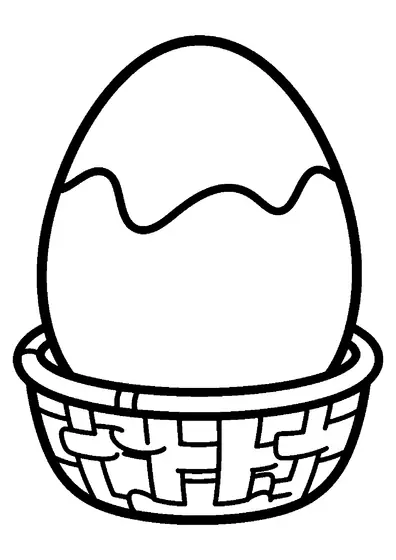
Twine-Wrapped Easter Egg
A rustic festive ornament features natural cord wrapped carefully around a traditional egg shape.

A4 format (portrait), black outlines on a white background · for home and classroom use
All coloring pages: Easter Bunny Coloring Pages
Similar coloring pages: Easter Bunny Coloring Pages



What else can you print? Free, no account needed
Custom Name Coloring Pages
Enter your child's name to generate a custom coloring page featuring large outline letters to color and decorate.
Open generator →Connect the Dots Generator
Eight connect-the-dots pictures across three difficulty levels. Features faint outline guides for younger children and dots only for older kids.
Open generator →Printables
Worksheets, tracing lines, mazes and dot-to-dots in A4.
Browse printables →
Traditional Handmade Easter Ornament
Wrapping eggs in natural fibers creates a rustic decorative item often displayed during spring celebrations. The textured rows of cord cover the surface in smooth horizontal or diagonal patterns, giving the traditional egg shape a cozy, handcrafted look.
Natural Materials in Crafting
Using natural jute or cotton cord to decorate objects is an ancient crafting technique that remains popular for holiday displays. Craftsmen often secure the fibers with simple adhesive, wrapping from top to bottom to form an even outer layer.
Real World Colors of Wrapped Decorations
- Twisted fiber strands: natural beige, light tan, or soft brown
- Inner egg surface: plain white, cream, or pastel spring hues
- Accent cord details: dyed pastel yellow, soft pink, or muted green