
Little Chick by an Old Windmill
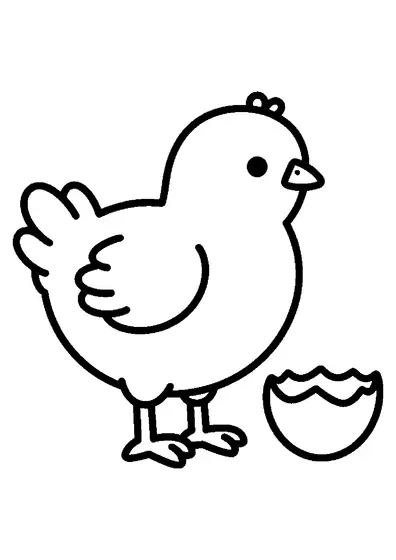
A fluffy chick stands near a basket of decorated Easter eggs with an old windmill rising in the background.

A4 format (portrait), black outlines on a white background · for home and classroom use
All coloring pages: Easter Bunny Coloring Pages
Similar coloring pages: Easter Bunny Coloring Pages


What else can you print? Free, no account needed
Custom Name Coloring Pages
Enter your child's name to generate a custom coloring page featuring large outline letters to color and decorate.
Open generator →Connect the Dots Generator
Eight connect-the-dots pictures across three difficulty levels. Features faint outline guides for younger children and dots only for older kids.
Open generator →Printables
Worksheets, tracing lines, mazes and dot-to-dots in A4.
Browse printables →
A Spring Chick Beneath the Windmill
The young chick and its basket of Easter eggs form the foreground of this spring scene. Behind them stands a traditional old windmill, connecting the small farm bird with a structure once used for practical work. The combination of chick, eggs, basket, and windmill gives the setting both Easter and countryside themes.
Chicks and Windmills
Newly hatched chicks rely on warmth because they cannot regulate their body temperature as effectively as adult chickens. They communicate with soft peeps, including calls that can signal comfort, separation, or distress. Traditional windmills capture moving air with sails or blades and transfer that motion to machinery, often for grinding grain or pumping water.
Colors Found in Real Life
- Chick’s down: often pale yellow, cream, brown, black, or patterned, depending on the breed
- Chick’s beak and feet: commonly pale yellow, orange, tan, or gray
- Decorated Easter eggs: combinations of pink, blue, green, yellow, purple, red, or orange
- Egg basket: straw beige, golden tan, or natural brown
- Old windmill: weathered brown wood, pale stone, red brick, or whitewashed surfaces