
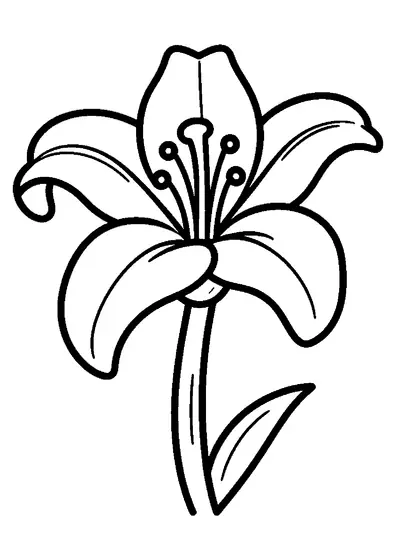
Grape Hyacinth with a Thick Stem
Grape hyacinths feature dense clusters of small bell-like flowers atop upright stems surrounded by slender foliage.

A4 format (portrait), black outlines on a white background · for home and classroom use
All coloring pages: Easter Bunny Coloring Pages
Similar coloring pages: Easter Bunny Coloring Pages




What else can you print? Free, no account needed
Custom Name Coloring Pages
Enter your child's name to generate a custom coloring page featuring large outline letters to color and decorate.
Open generator →Connect the Dots Generator
Eight connect-the-dots pictures across three difficulty levels. Features faint outline guides for younger children and dots only for older kids.
Open generator →Printables
Worksheets, tracing lines, mazes and dot-to-dots in A4.
Browse printables →
Composition of the Grape Hyacinth
The grape hyacinth plant includes a central blossom cluster composed of rounded, bell-shaped individual flowers stacked closely together. A thick main stem supports this compact flower head, while long narrow leaves extend alongside the central stalk from ground level.
Characteristics of Muscari Plants
Botanically known as Muscari, grape hyacinths are small spring-flowering bulbs native to the Mediterranean region and central Europe. The common name refers to tight clusters of blue flowers that resemble miniature bunches of grapes hanging upside down. These hardy perennials spread quickly through underground bulb offsets and self-seeding in garden soil.
Natural Colors of Grape Hyacinths
- Flower bells: deep cobalt blue, violet, or sky blue
- Upper rim of flower bells: thin white edges
- Main stem: light apple green
- Narrow leaves: rich medium green