
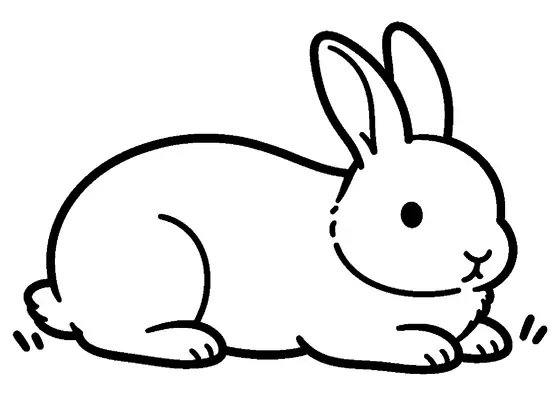
Blanc de Hotot Rabbit with Dark Eye Rings
A distinctive Blanc de Hotot rabbit shows dark fur rings surrounding its eyes.

A4 format (portrait), black outlines on a white background · for home and classroom use
All coloring pages: Easter Bunny Coloring Pages
Similar coloring pages: Easter Bunny Coloring Pages


What else can you print? Free, no account needed
Custom Name Coloring Pages
Enter your child's name to generate a custom coloring page featuring large outline letters to color and decorate.
Open generator →Connect the Dots Generator
Eight connect-the-dots pictures across three difficulty levels. Features faint outline guides for younger children and dots only for older kids.
Open generator →Printables
Worksheets, tracing lines, mazes and dot-to-dots in A4.
Browse printables →
The Unique Markings of the Blanc de Hotot Rabbit
This scene features the Blanc de Hotot rabbit breed, recognized by its bright white body and narrow dark bands framing the eyes. The contrasting facial markings give this animal a striking appearance.
Origins of the Blanc de Hotot Breed
The Blanc de Hotot was developed in Hotot-en-Auge, Normandy, France, during the early twentieth century by Eugénie Bernhard. She spent nearly twenty years breeding white rabbits to achieve a pure white coat combined with distinct dark eye bands. Today, it remains a rare and admired rabbit breed known for its thick fur and well-rounded body structure.
Colors of the Blanc de Hotot Rabbit
- Body fur: Pure snow white
- Eye rings: Dark brown or black hair bands framing the eyes
- Rabbit eyes: Deep brown
- Inner ears and nose skin: Pale pink hidden under white fur