
Easter Basket by a Country Church
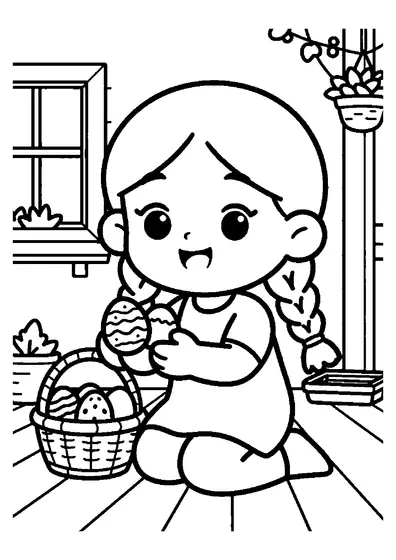
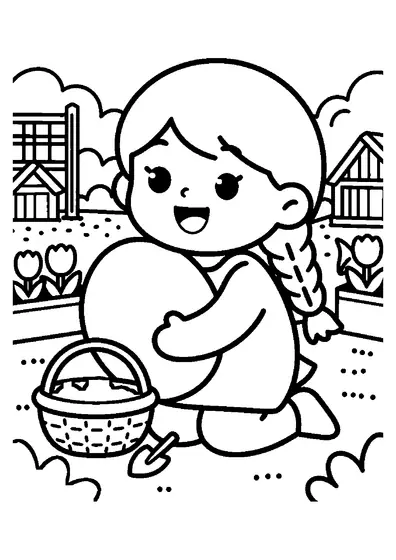
A braided child carrying a woven holiday basket stands in the courtyard area of a traditional rural house of worship.

A4 format (portrait), black outlines on a white background · for home and classroom use
All coloring pages: Easter Coloring Pages
Similar coloring pages: Easter Coloring Pages


What else can you print? Free, no account needed
Custom Name Coloring Pages
Enter your child's name to generate a custom coloring page featuring large outline letters to color and decorate.
Open generator →Connect the Dots Generator
Eight connect-the-dots pictures across three difficulty levels. Features faint outline guides for younger children and dots only for older kids.
Open generator →Printables
Worksheets, tracing lines, mazes and dot-to-dots in A4.
Browse printables →
Rural Church Courtyard Gathering
Village churches often serve as gathering places for seasonal traditions in countryside communities. A young girl styled with a hair braid holds a large Easter basket while standing in the historic stone courtyard outside a country church.
Architecture of Country Churches
Rural churches built in small towns were historically constructed from locally sourced materials such as fieldstone, timber, and slate. Their bell towers served not only for religious calls but also alerted farming neighbors across miles of fields in emergencies.
Traditional Colors of Country Architecture
- Country church walls: weathered white clapboard, red brick, or gray fieldstone
- Courtyard stone paving: charcoal slate, river cobblestones, or aged gray granite
- Woven holiday basket: natural golden straw, pale birch wood, or tan wicker
- Braided hair tones: warm chestnut brown, golden blonde, or deep raven black