
Easter Basket at a Wooden Lakeside Dock
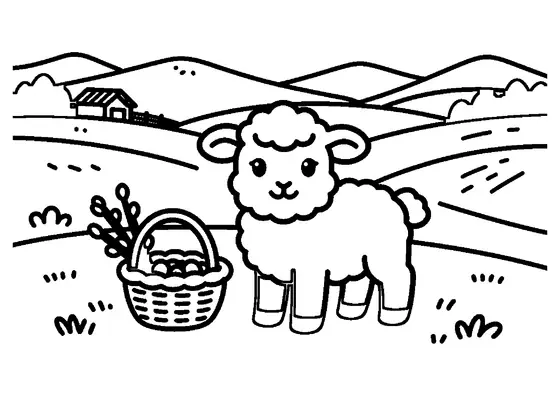
An Easter basket with decorated eggs rests near a wreath inside a quiet lake dock shelter.

A4 format (landscape), black outlines on a white background · for home and classroom use
All coloring pages: Easter Coloring Pages
Similar coloring pages: Easter Coloring Pages



What else can you print? Free, no account needed
Custom Name Coloring Pages
Enter your child's name to generate a custom coloring page featuring large outline letters to color and decorate.
Open generator →Connect the Dots Generator
Eight connect-the-dots pictures across three difficulty levels. Features faint outline guides for younger children and dots only for older kids.
Open generator →Printables
Worksheets, tracing lines, mazes and dot-to-dots in A4.
Browse printables →
Easter Scene at the Lakeside Dock
A traditional Easter basket rests alongside a festive wreath in a wooden dock shelter right by the water. The surrounding lake features gentle waves, providing a serene outdoor environment for seasonal holiday elements.
Lake Docks and Water Structures
Wooden docks are built on pilings driven into the lakebed to withstand the continuous movement of water and seasonal changes. Shelters built over these docks offer protection from sun and rainfall for boats and resting visitors.
Natural Colors of the Lake Dock Scene
- Easter basket: brown woven wicker or light beige wood
- Easter eggs: pastel shades of pink, yellow, blue, green, or bright dyed patterns
- Wreath: green evergreen boughs or dried grapevine branches with pastel ribbons
- Wooden dock shelter: weathered brown or natural timber tones
- Lake water: deep blue, turquoise, or dark gray depending on depth and sky reflections