
Wide-Arm Snowflake
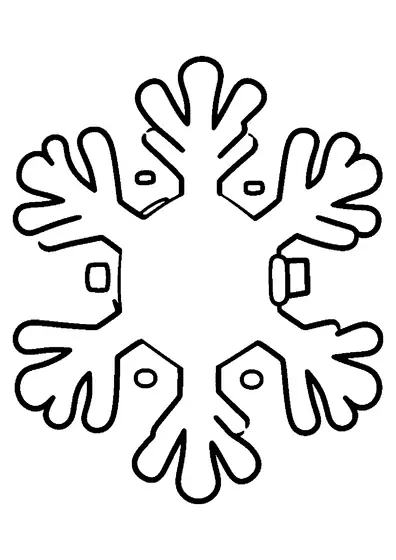
A symmetrical winter snowflake showcases six broad arms radiating outward from its center point.

A4 format (portrait), black outlines on a white background · for home and classroom use
All coloring pages: Christmas Coloring Pages
Similar coloring pages: Christmas Coloring Pages





What else can you print? Free, no account needed
Custom Name Coloring Pages
Enter your child's name to generate a custom coloring page featuring large outline letters to color and decorate.
Open generator →Connect the Dots Generator
Eight connect-the-dots pictures across three difficulty levels. Features faint outline guides for younger children and dots only for older kids.
Open generator →Printables
Worksheets, tracing lines, mazes and dot-to-dots in A4.
Browse printables →
Symmetrical Broad Snowflake Crystal
Snowflakes are intricate ice crystals that form high in Earth's atmosphere when water vapor freezes around tiny particles. Every natural snowflake develops a unique six-sided or six-armed structure due to the molecular arrangement of ice. Wide-armed crystal formations often form in slightly warmer cloud temperatures where ice crystals grow rapidly.
Science of Snowflake Formation
As a snowflake falls through different layers of air, changing humidity and temperature alter the growth of its branches. No two snowflakes in nature are completely identical because each crystal follows a distinct path through the sky. When millions of these translucent ice crystals gather together on the ground, they create a blanket of soft white snow.
Colors of Real Ice Snowflakes
- Individual ice crystal: clear translucent or crystal ice
- Accumulated snow crystal: bright white
- Reflected sky highlights: pale sky blue or icy turquoise
- Shadowed crystal edges: cool gray or soft lavender