
Holly Cupcake
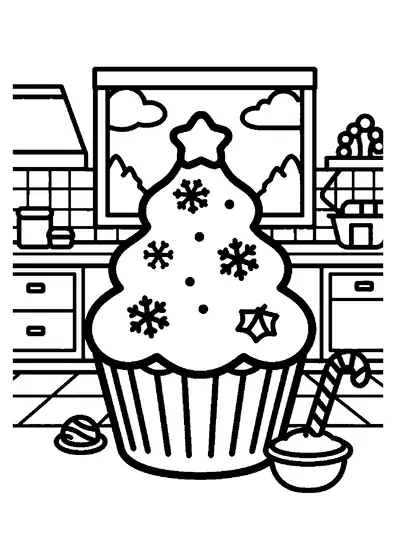
A decorated iced pastry sits on a kitchen table beside a bowl and spoon near a cold winter window.

A4 format (portrait), black outlines on a white background · for home and classroom use
All coloring pages: Christmas Gingerbread and Sweets Coloring Pages
Similar coloring pages: Christmas Gingerbread and Sweets Coloring Pages




What else can you print? Free, no account needed
Custom Name Coloring Pages
Enter your child's name to generate a custom coloring page featuring large outline letters to color and decorate.
Open generator →Connect the Dots Generator
Eight connect-the-dots pictures across three difficulty levels. Features faint outline guides for younger children and dots only for older kids.
Open generator →Printables
Worksheets, tracing lines, mazes and dot-to-dots in A4.
Browse printables →
A Winter Table Setting with a Holly Pastry
On a quiet kitchen table, a single large cupcake features smooth icing topped with a decorative holly leaf arrangement. Next to the pastry rests a simple bowl and a spoon, while a window looking out onto a winter scene completes the setting.
Facts About Holly in Winter Traditions
Holly plants are famous for keeping their glossy green leaves throughout the cold winter months when most other trees lose their foliage. The bright red berries of European holly provide essential food for birds during snowfall, though they are not edible for humans. Ancient cultures viewed evergreen holly branches as symbols of eternal life and protection.
Natural Colors of Holly Pastries
- Holly leaves decoration: dark glossy green
- Holly berries: bright crimson red
- Cupcake icing: soft white or vanilla yellow
- Kitchen bowl: glazed blue or matte ceramic cream
- Metal spoon: shiny silver gray