
Gingerbread Gift Box in the Bakery
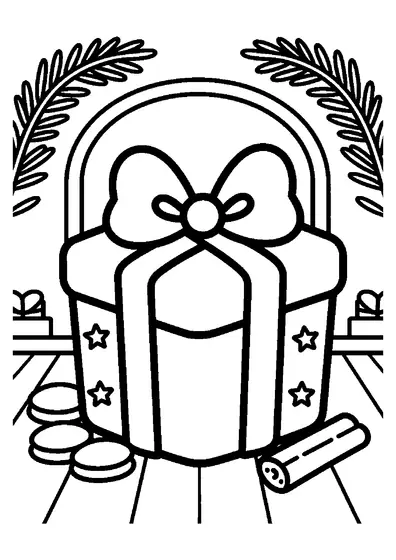
A present-shaped gingerbread cookie rests on a bakery work surface beside a wooden rolling pin and a mixing bowl.

A4 format (landscape), black outlines on a white background · for home and classroom use
All coloring pages: Christmas Gingerbread and Sweets Coloring Pages
Similar coloring pages: Christmas Gingerbread and Sweets Coloring Pages



What else can you print? Free, no account needed
Custom Name Coloring Pages
Enter your child's name to generate a custom coloring page featuring large outline letters to color and decorate.
Open generator →Connect the Dots Generator
Eight connect-the-dots pictures across three difficulty levels. Features faint outline guides for younger children and dots only for older kids.
Open generator →Printables
Worksheets, tracing lines, mazes and dot-to-dots in A4.
Browse printables →
Present-Shaped Gingerbread in a Holiday Bakery
Bakeries prepare special sweet creations during the festive season, including gingerbread crafted to resemble wrapped gift boxes. These rectangular treats feature iced holiday patterns, placed alongside essential baking utensils like rolling pins and prep bowls. The interior of a traditional bakery provides a warm atmosphere where bakers prepare seasonal treats.
History of Gift Packages and Bakery Crafts
Exchanging wrapped presents became widespread in the nineteenth century when manufactured paper and decorative ribbons became accessible. Bakers quickly adopted present-shaped molds and cookie cutters to mirror the excitement of holiday gift-giving. Professional bakeries relied on heavy wooden rolling pins to flatten thick, spiced dough evenly across large worktables.
Colors of a Bakery Workshop
- Present cookie dough: baked golden brown or rich cinnamon brown
- Iced gift ribbons: white icing, crimson red, or pale yellow
- Wooden rolling pin: light maple, birch yellow, or medium oak brown
- Mixing bowl: terracotta orange, ceramic white, or slate gray
- Bakery interior walls: warm cream, pastel beige, or brick brown