
Girl with a Balloon by a Willow Den
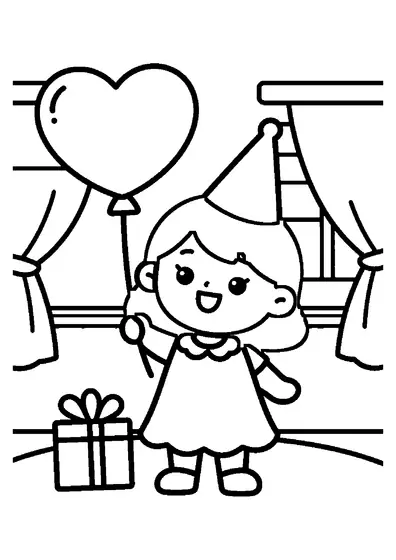
A girl carrying a heart-shaped balloon stands outdoors beside a den woven from living willow branches.

A4 format (portrait), black outlines on a white background · for home and classroom use
All coloring pages: Birthday Coloring Pages
Similar coloring pages: Birthday Coloring Pages

What else can you print? Free, no account needed
Custom Name Coloring Pages
Enter your child's name to generate a custom coloring page featuring large outline letters to color and decorate.
Open generator →Connect the Dots Generator
Eight connect-the-dots pictures across three difficulty levels. Features faint outline guides for younger children and dots only for older kids.
Open generator →Printables
Worksheets, tracing lines, mazes and dot-to-dots in A4.
Browse printables →
Heart-Shaped Balloon Beside a Woven Willow Den
A girl holds a heart-shaped balloon near a natural dome structure woven from flexible willow boughs. Willow dens are living garden structures created by bending and weaving pliable willow rods together.
Living Willow Structures and Balloon Physics
Living willow dens are constructed using fresh green willow rods inserted directly into wet soil, where they take root and grow leaves every spring. Heart-shaped foil or latex balloons retain their buoyant helium gas using non-porous materials that prevent air molecules from escaping quickly.
Colors of Willow Dens and Heart Balloons
- Woven willow stems: reddish brown, olive green, or golden tan
- Willow leaves: bright green or soft sage green
- Heart-shaped balloon: ruby red, bright pink, or shiny magenta
- Garden soil ground: dark brown or rich charcoal earth