
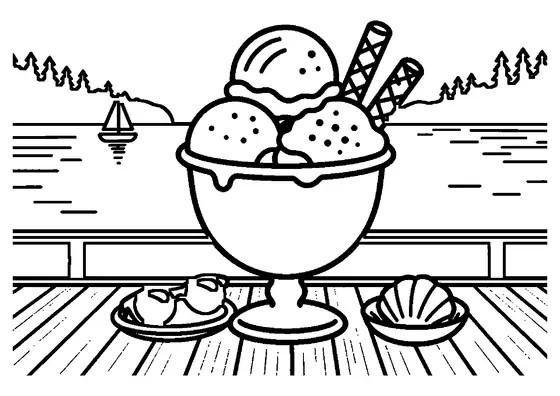
Ice Cream Sundae on a Table by the Beach Pier
A tall glass filled with ice cream scoops and sweet sauce rests on an outdoor table near an ocean pier.

A4 format (landscape), black outlines on a white background · for home and classroom use
All coloring pages: Ice Cream and Dessert Coloring Pages
Similar coloring pages: Ice Cream and Dessert Coloring Pages

What else can you print? Free, no account needed
Custom Name Coloring Pages
Enter your child's name to generate a custom coloring page featuring large outline letters to color and decorate.
Open generator →Connect the Dots Generator
Eight connect-the-dots pictures across three difficulty levels. Features faint outline guides for younger children and dots only for older kids.
Open generator →Printables
Worksheets, tracing lines, mazes and dot-to-dots in A4.
Browse printables →
Ice Cream Sundaes at the Ocean Pier
A traditional sundae served in a glass dish combines frozen cream with rich dessert sauce. Tables set near coastal wooden piers allow people to enjoy cold treats while listening to the surrounding waves and marine environment.
Fascinating Facts About Seaside Piers and Sundaes
Ocean piers were originally constructed as landing docks for boats before becoming popular destinations for seaside strolls and food stalls. The classic ice cream sundae gained popularity in the late nineteenth century as a special weekend treat. Coastal humidity causes frozen desserts to melt much faster, which is why dessert shops near water often serve them in deep glass dishes.
Real-Life Colors of a Beach Sundae Scene
- Vanilla ice cream: Creamy white or light ivory
- Chocolate sauce: Deep dark brown
- Dessert sauce topping: Bright crimson red or rich brown
- Wooden pier: Weathered gray or warm brown
- Ocean water: Deep blue or turquoise green