
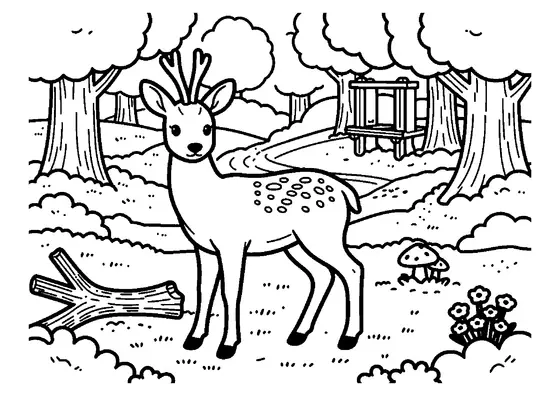
Young Deer Beside Wild Irises by a Stream
A young deer pauses near the edge of a woodland stream where wild irises bloom along the damp shore.

A4 format (portrait), black outlines on a white background · for home and classroom use
All coloring pages: Flower Coloring Pages
Similar coloring pages: Flower Coloring Pages



What else can you print? Free, no account needed
Custom Name Coloring Pages
Enter your child's name to generate a custom coloring page featuring large outline letters to color and decorate.
Open generator →Connect the Dots Generator
Eight connect-the-dots pictures across three difficulty levels. Features faint outline guides for younger children and dots only for older kids.
Open generator →Printables
Worksheets, tracing lines, mazes and dot-to-dots in A4.
Browse printables →
Wildlife and Water Flowers Along Forest Streams
Stream banks in quiet forests provide rich habitats where wild flora and timid forest animals meet. A slender young deer stands beside freshwater irises growing along the water edge. Moist soil near running streams allows damp-loving plants to produce striking flowers every spring.
Interesting Facts About Wild Irises
Wild irises, often called flag irises, have specialized petals called falls that droop downward to guide bumblebees toward nectar. The name iris comes from the ancient word for rainbow because these flowers occur in almost every color of the spectrum. Their thick root systems help anchor stream banks and prevent soil erosion during heavy rains.
Natural Colors of Deer and Riverbank Irises
- Young deer coat: reddish brown with pale tan underside accents
- Iris petals: deep violet, royal blue, or yellow with golden throat spots
- Iris leaves: sword-shaped deep green blades
- Stream bank soil: dark moist earth and mossy green patches