
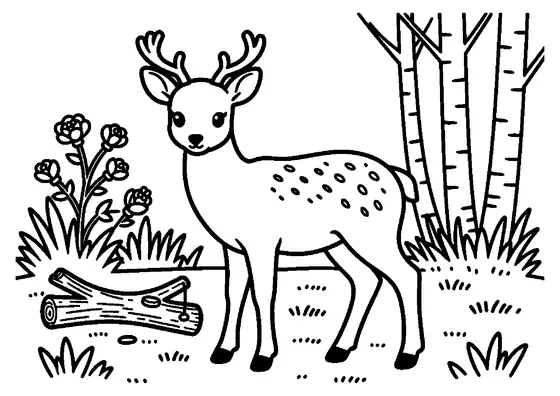
Fawn by a Stone Waterfall in a Rose Garden
A gentle fawn explores the quiet grounds of a palace garden near a cascading stone waterfall flanked by blooming roses.

A4 format (landscape), black outlines on a white background · for home and classroom use
All coloring pages: Rose Coloring Pages
Similar coloring pages: Rose Coloring Pages




What else can you print? Free, no account needed
Custom Name Coloring Pages
Enter your child's name to generate a custom coloring page featuring large outline letters to color and decorate.
Open generator →Connect the Dots Generator
Eight connect-the-dots pictures across three difficulty levels. Features faint outline guides for younger children and dots only for older kids.
Open generator →Printables
Worksheets, tracing lines, mazes and dot-to-dots in A4.
Browse printables →
Peaceful Wildlife in Historic Palace Gardens
Palace gardens are expansive landscape parks designed with ornate stone structures, flowing water fountains, and carefully curated floral displays. Deer and young fawns sometimes wander into these peaceful open grounds to search for shade and fresh vegetation. Cascading stone waterfalls cool the surrounding air, creating a humid microclimate that allows climbing rose bushes to thrive along the masonry walls.
Facts About Young Fawns and Water Features
Newborn and young deer have distinctive white spots along their backs that camouflage them among dappled forest light and garden shrubbery. These spots gradually fade as the fawn grows its dense adult winter coat. Waterfalls in formal gardens recirculate fresh water over natural river rocks, providing a clean drinking source for local woodland animals.
Real Colors of Fawns and Garden Landscapes
- Fawn coat: Soft reddish-brown fur marked with cream white spots along the back and flanks
- Fawn eyes and nose: Dark charcoal brown eyes with a moist black nose tip
- Natural stone waterfall: Weathered gray limestone, dark granite, or mossy brown slate
- Palace garden roses: Rich scarlet red, peach, soft pink, or cream blossoms
- Garden foliage: Rich emerald green leaves accompanied by dark forest green moss near the water