
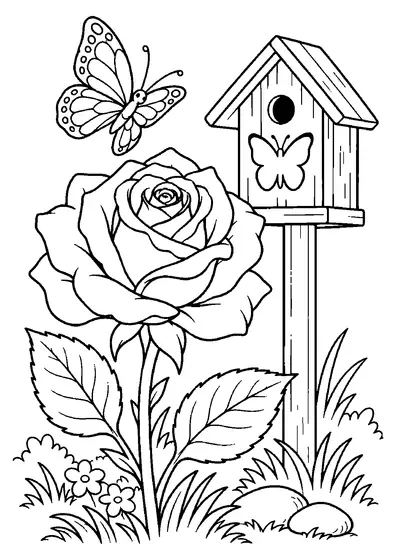
Butterfly on a Climbing Rose in a Conservatory
Enclosed plant houses provide warm climate conditions where delicate insects visit vibrant climbing blossoms.

A4 format (portrait), black outlines on a white background · for home and classroom use
All coloring pages: Rose Coloring Pages
Similar coloring pages: Rose Coloring Pages




What else can you print? Free, no account needed
Custom Name Coloring Pages
Enter your child's name to generate a custom coloring page featuring large outline letters to color and decorate.
Open generator →Connect the Dots Generator
Eight connect-the-dots pictures across three difficulty levels. Features faint outline guides for younger children and dots only for older kids.
Open generator →Printables
Worksheets, tracing lines, mazes and dot-to-dots in A4.
Browse printables →
Tropical Conservatories and Climbing Rose Blossoms
Glass conservatories maintain elevated humidity levels, enabling climbing roses and exotic butterflies to flourish indoors year-round. Climbing rose varieties produce long vining stems that support dense foliage and sweet-smelling flowers visited by winged pollinators.
Insect Pollination and Indoor Glasshouses
Butterflies rely on warm ambient air within conservatories to raise their body temperatures before flying between flowers. Their feet contain chemical receptors that allow them to taste leaf surfaces and identify ideal blossoms for nectar feeding.
Real Colors of Tropical Butterflies and Roses
- Butterfly upper wings: vibrant orange, iridescent blue, or yellow
- Butterfly body: dark brown or black
- Climbing rose petals: bright pink, deep red, or yellow
- Rose foliage: deep forest green
- Conservatory structure frame: white or bronze metal