
Ladybug on a Hollyhock Beside an Old Watermill
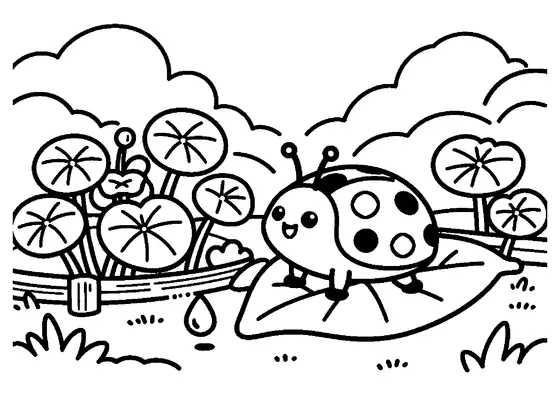
A small ladybug crawls up a tall hollyhock stem near a historic wooden watermill located by a stream.

A4 format (portrait), black outlines on a white background · for home and classroom use
All coloring pages: Flower Coloring Pages
Similar coloring pages: Flower Coloring Pages

What else can you print? Free, no account needed
Custom Name Coloring Pages
Enter your child's name to generate a custom coloring page featuring large outline letters to color and decorate.
Open generator →Connect the Dots Generator
Eight connect-the-dots pictures across three difficulty levels. Features faint outline guides for younger children and dots only for older kids.
Open generator →Printables
Worksheets, tracing lines, mazes and dot-to-dots in A4.
Browse printables →
Ladybug Climbing a Hollyhock by the Watermill
This scene shows a tiny ladybug making its way up a sturdy hollyhock stem growing near an old watermill structure. The tall flowering stalk rises close to the historical mill building, where flowing water once turned heavy timber machinery. Natural stream banks provide damp, fertile soil where tall hollyhocks and beneficial insects thrive together.
Wildlife and Architectural Facts
Hollyhocks can grow over eight feet tall on single thick stems, producing large cup-shaped flowers that attract bees and beetles. Ladybugs are natural garden predators that climb tall flower stems searching for garden pests like aphids to eat. Traditional watermills were constructed along moving rivers to harness water energy for grinding grain using large rotating wheels.
Natural Colors of Watermill Scenes
- Ladybug wing covers: bright red or orange with distinct black spots
- Ladybug head and legs: solid shiny black with tiny white markings
- Hollyhock blossoms: deep pink, crimson red, yellow, or soft white
- Hollyhock stem and leaves: rough textured emerald green
- Old watermill walls: weathered brown wood or mossy gray stone