
Hedgehog Beside a Clay Pot in the Garden
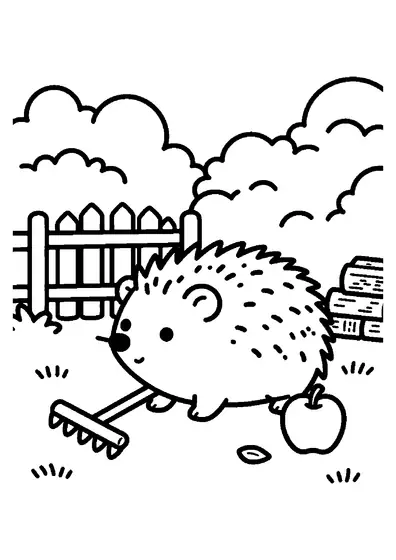
A curious hedgehog wanders along a garden path past a tipped-over clay flowerpot and a small rake near flower beds.

A4 format (portrait), black outlines on a white background · for home and classroom use
All coloring pages: Flower Meadow Coloring Pages
Similar coloring pages: Flower Meadow Coloring Pages


What else can you print? Free, no account needed
Custom Name Coloring Pages
Enter your child's name to generate a custom coloring page featuring large outline letters to color and decorate.
Open generator →Connect the Dots Generator
Eight connect-the-dots pictures across three difficulty levels. Features faint outline guides for younger children and dots only for older kids.
Open generator →Printables
Worksheets, tracing lines, mazes and dot-to-dots in A4.
Browse printables →
A Hedgehog Exploring a Garden Path
Backyard gardens provide habitat for small nocturnal mammals searching for food among flower beds. In this scene, a curious hedgehog travels along a garden path beside a small rake and a tipped-over clay flowerpot.
Nocturnal Visitors in Backyard Flower Beds
European hedgehogs carry around five thousand hollow spines made of keratin, the same tough protein found in human fingernails. When threatened, specialized back muscles allow hedgehogs to roll into a tight spiky ball to protect their soft faces and bellies.
Real Colors of Garden Wildlife and Tools
- Hedgehog spines: Dark brown with light beige tips and a grayish belly coat
- Tipped-over clay flowerpot: Earthy terracotta red, burnt orange, or dull reddish-brown
- Small garden rake: Dark cast iron or steel head with a wooden handle
- Garden path: Gravel gray, sandy tan, or dark brown soil