
Flat Rock Among Clumps of Grass
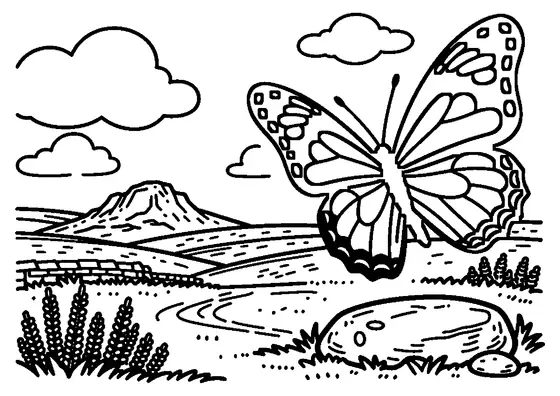
A wide, flat rock rests on the ground between clumps of grass topped with seed heads.

A4 format (landscape), black outlines on a white background · for home and classroom use
All coloring pages: Flower Meadow Coloring Pages
Similar coloring pages: Flower Meadow Coloring Pages


What else can you print? Free, no account needed
Custom Name Coloring Pages
Enter your child's name to generate a custom coloring page featuring large outline letters to color and decorate.
Open generator →Connect the Dots Generator
Eight connect-the-dots pictures across three difficulty levels. Features faint outline guides for younger children and dots only for older kids.
Open generator →Printables
Worksheets, tracing lines, mazes and dot-to-dots in A4.
Browse printables →
The Flat Rock in the Grass
The rock is viewed from the side at the center of the clearing, showing its low profile and broad upper surface. Clumps of grass rise on both sides, and several stalks carry narrow seed heads. The open ground and empty space beyond keep attention on this simple meeting of stone and meadow plants.
Curious Facts About Meadow Rocks
A flat rock may be a piece of layered stone that split along a natural plane, or it may have been worn smooth by water, weather, and moving soil. Rocks lying in grass can absorb warmth from sunlight and release it slowly after the surrounding air cools. Grass seed heads hold flowers and, later, seeds that may be carried by wind or animals.
Colors Found in Nature
- Flat rock surface: gray, slate blue, sandy tan, reddish brown, or nearly black depending on the minerals
- Rock edges: darker gray or brown where the surface is damp or weathered
- Grass blades: bright green, olive green, or straw yellow during dry periods
- Seed heads: pale green when young, becoming tan, gold, or brown as they mature
- Ground: brown, ocher, or muted green where soil and low vegetation meet