
Princess with a Tiara Waiting for a Horse-Drawn Carriage
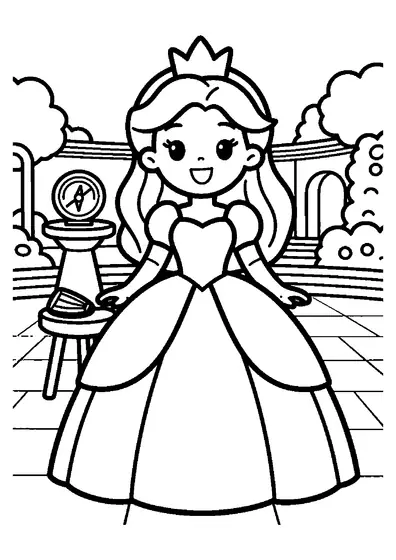
Wearing an elegant ball gown and a sparkling tiara, a princess stands under a decorated pavilion while awaiting a horse carriage.

A4 format (portrait), black outlines on a white background · for home and classroom use
All coloring pages: Princess Coloring Pages
Similar coloring pages: Princess Coloring Pages



What else can you print? Free, no account needed
Custom Name Coloring Pages
Enter your child's name to generate a custom coloring page featuring large outline letters to color and decorate.
Open generator →Connect the Dots Generator
Eight connect-the-dots pictures across three difficulty levels. Features faint outline guides for younger children and dots only for older kids.
Open generator →Printables
Worksheets, tracing lines, mazes and dot-to-dots in A4.
Browse printables →
A Royal Princess Waiting for Her Carriage
A princess dressed in an elaborate ball gown and wearing a royal tiara stands beneath an ornate shelter. She waits for the arrival of a horse-drawn carriage, surrounded by detailed architectural elements of the royal castle grounds.
Facts About Royal Carriages and Pavilion Shelters
Historical royal carriages were engineered with leather strap suspension systems to absorb shocks on bumpy cobblestone roads. Covered pavilions and stone porte-cochères were constructed at castle entrances so nobility could step into carriages without being exposed to rain or mud. Royal tiaras were crafted from gold or platinum and set with precious gemstones to symbolize rank during official departures.
Real World Colors of Royal Transportation and Attire
- Royal tiara: Ceremonial crowns were fashioned from polished gold or silver set with clear diamonds and blue sapphires.
- Elegant ball gown: Formal court gowns were dyed in regal shades like plum, royal blue, champagne gold, or deep magenta.
- Pavilion architectural structure: Decorative shelter posts and arches feature carved white marble, limestone, or painted ironwork.
- Horse-drawn carriage body: Royal carriages were painted in glossy black, dark maroon, or navy with gilded gold leaf trim.