
Princess in the Palace Tapestry Room
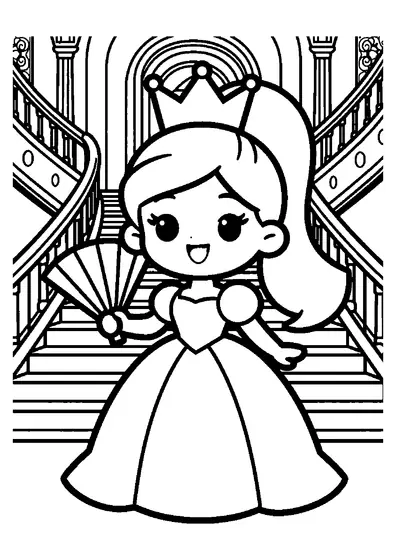
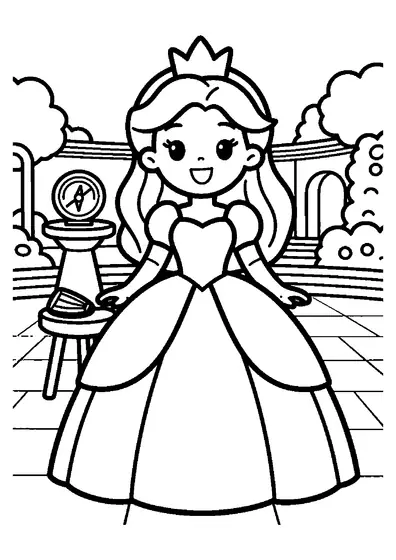
A bob-haired princess in an elegant gown stands in a grand palace chamber adorned with large woven tapestries.

A4 format (landscape), black outlines on a white background · for home and classroom use
All coloring pages: Princess Coloring Pages
Similar coloring pages: Princess Coloring Pages




What else can you print? Free, no account needed
Custom Name Coloring Pages
Enter your child's name to generate a custom coloring page featuring large outline letters to color and decorate.
Open generator →Connect the Dots Generator
Eight connect-the-dots pictures across three difficulty levels. Features faint outline guides for younger children and dots only for older kids.
Open generator →Printables
Worksheets, tracing lines, mazes and dot-to-dots in A4.
Browse printables →
A Princess in a Grand Palace Tapestry Room
Historic royal chambers were frequently decorated with large hand-woven wall hangings that added warmth and elegance to stone walls. This scene shows a bob-haired princess wearing an elegant gown inside a decorated tapestry room, featuring a nearby tiara and decorative fan.
The Art and Purpose of Palace Tapestries
Woven tapestries were among the most prized possessions in European palaces during the Middle Ages and Renaissance. Artisans spent months or years weaving intricate designs using wool, silk, and gold threads to depict historical events, mythologies, and lush landscapes. Beyond decorative appeal, these thick wall hangings insulated cold stone walls, keeping drafty palace rooms warm throughout winter.
Traditional Palette of Historical Tapestry Rooms
- Palace tapestries: muted indigo blue, forest green, terracotta red, and ochre
- Princess gown: lavender purple, rose pink, or sky blue fabric
- Royal tiara: silver filigree with shimmering clear crystals
- Decorative fan: cream silk with golden filigree ribs