
Palace Gown with a Train on a Dress Form
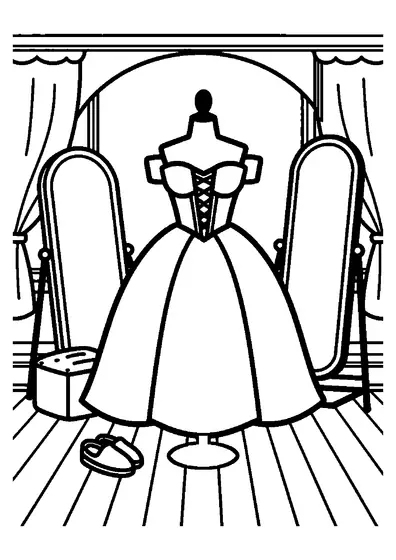
An empire-waist palace gown with a long train is displayed on a dress form in a royal dressmaker's studio.

A4 format (landscape), black outlines on a white background · for home and classroom use
All coloring pages: Princess Coloring Pages
Similar coloring pages: Princess Coloring Pages



What else can you print? Free, no account needed
Custom Name Coloring Pages
Enter your child's name to generate a custom coloring page featuring large outline letters to color and decorate.
Open generator →Connect the Dots Generator
Eight connect-the-dots pictures across three difficulty levels. Features faint outline guides for younger children and dots only for older kids.
Open generator →Printables
Worksheets, tracing lines, mazes and dot-to-dots in A4.
Browse printables →
A Palace Gown in the Dressmaker's Studio
The gown has a high empire waist and a long train spread across the studio floor while the garment rests on a dress form. This royal dressmaker's setting shows the dress as a work to be fitted, adjusted, and prepared before it is worn.
Why Dressmakers Use Dress Forms
A dress form represents the shape and proportions of a human torso, allowing fabric to be pinned and arranged without a wearer standing still. An empire waist sits just below the bust, and the fabric beneath it falls toward the floor rather than fitting closely at the natural waist.
Historically Plausible Gown Colors
- Palace gown: ivory, pale blue, rose, lavender, emerald, burgundy, or gold were possible formal choices
- Long train: normally made in the gown's main color or a coordinated shade
- Dress form covering: commonly cream, beige, gray, or black fabric
- Dress form stand: natural brown wood, black-painted wood, or dark metal
- Dressmaker's floor: wooden boards can range from pale honey to deep brown