
Long-Haired Princess by the Castle Conservatory
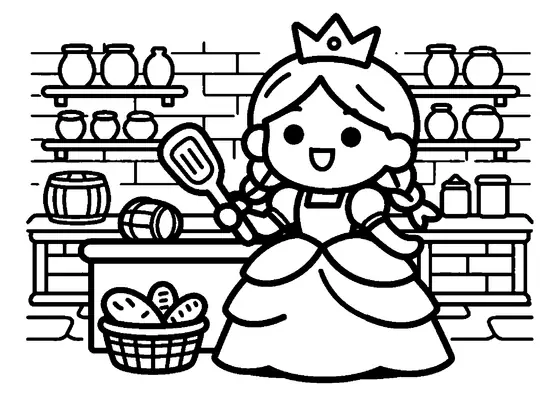
Outside a glass palace conservatory, a smiling princess with a long braided hair styling tends to lush greenery in her satin ball gown.

A4 format (portrait), black outlines on a white background · for home and classroom use
All coloring pages: Princess Coloring Pages
Similar coloring pages: Princess Coloring Pages



What else can you print? Free, no account needed
Custom Name Coloring Pages
Enter your child's name to generate a custom coloring page featuring large outline letters to color and decorate.
Open generator →Connect the Dots Generator
Eight connect-the-dots pictures across three difficulty levels. Features faint outline guides for younger children and dots only for older kids.
Open generator →Printables
Worksheets, tracing lines, mazes and dot-to-dots in A4.
Browse printables →
A Princess Tending Plants at the Castle Conservatory
Near the glass structure of a castle conservatory, a smiling princess looks after various plants. She wears an elaborate satin ball gown designed for palace events, with her long hair arranged in a single braid. The setting combines elegant royal fashion with indoor gardening environments.
History and Purpose of Palace Conservatories
Glass conservatories became prominent features of European palaces during the seventeenth century to protect delicate exotic plants from cold climates. These structures were engineered with large glass panes to maximize natural sunlight, creating warm environments suitable for growing citrus trees, rare flowers, and tropical foliage year-round.
Colors of Botanic Gardens and Satin Garments
- Satin dress fabric: Soft rose pink, lavender, or mint green
- Plant foliage: Deep forest green, olive, or bright lime
- Conservatory glass frames: Dark iron black, bronze, or crisp white
- Natural braided hair: Golden blonde, chestnut brown, or jet black