
Full Court Gown on Display in the Royal Mint
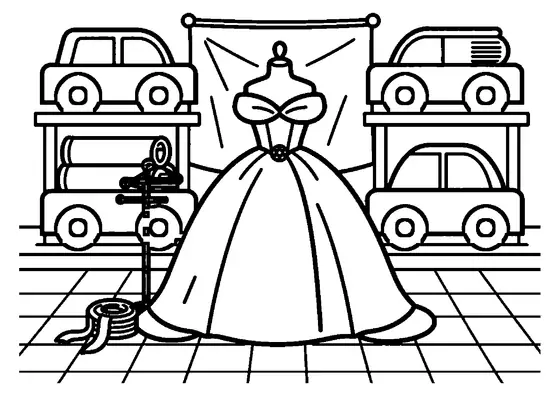
An elaborate court gown rests on a tailor mannequin inside a compact room within the official palace coin minting workshop.

A4 format (landscape), black outlines on a white background · for home and classroom use
All coloring pages: Princess Coloring Pages
Similar coloring pages: Princess Coloring Pages


What else can you print? Free, no account needed
Custom Name Coloring Pages
Enter your child's name to generate a custom coloring page featuring large outline letters to color and decorate.
Open generator →Connect the Dots Generator
Eight connect-the-dots pictures across three difficulty levels. Features faint outline guides for younger children and dots only for older kids.
Open generator →Printables
Worksheets, tracing lines, mazes and dot-to-dots in A4.
Browse printables →
A Formal Court Dress Displayed inside the Royal Mint
The scene features an ornate, full-length court gown mounted on a dress form mannequin set inside a room of the castle mint. The surrounding workshop environment reflects a historical palace facility where currency and official metalwork were produced. The quiet chamber provides a unique indoor back-of-house setting for royal apparel.
The Role of Royal Mints in Medieval Palaces
Royal mints were heavily guarded facility rooms where precious metals like gold and silver were melted, rolled into sheets, and stamped into official coinage. Master minters worked under strict royal supervision to ensure coin purity and weight standards. In larger palaces, secure minting rooms were sometimes positioned adjacent to royal wardrobes or treasure vaults.
Real Colors of Minting Workshops and Court Attire
- Court gown: Deep crimson velvet, royal purple satin, or gold brocade silk
- Dress form mannequin: Dark polished walnut wood, brass accents, and neutral beige linen padding
- Workshop floor: Dark reddish-brown brick or natural gray flagstone
- Mint chamber walls: Rough gray stone masonry or muted plaster walls
- Metalworking tools: Tarnished steel gray, dark iron, and metallic copper tones