
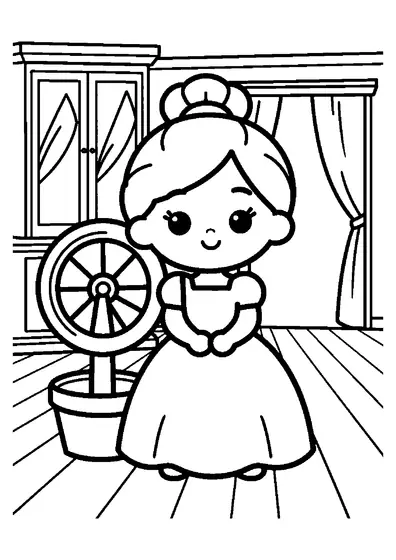
Princess in a Stained Glass Hallway
A royal hallway features decorative stained glass windows as a princess moves past decorative palace furnishings.

A4 format (portrait), black outlines on a white background · for home and classroom use
All coloring pages: Castle and Palace Coloring Pages
Similar coloring pages: Castle and Palace Coloring Pages



What else can you print? Free, no account needed
Custom Name Coloring Pages
Enter your child's name to generate a custom coloring page featuring large outline letters to color and decorate.
Open generator →Connect the Dots Generator
Eight connect-the-dots pictures across three difficulty levels. Features faint outline guides for younger children and dots only for older kids.
Open generator →Printables
Worksheets, tracing lines, mazes and dot-to-dots in A4.
Browse printables →
Palace Stained Glass and Royal Hallways
A palace hallway serves as a grand passage connecting different wings of a royal residence. Large stained glass windows allow colored light to filter across the stone floor, highlighting decorative elements such as a seating bench and a porcelain vase placed along the corridor walls.
Facts About Stained Glass Artistry
Stained glass craftsmanship reached remarkable detail during the medieval and Renaissance periods, often decorating cathedral corridors and noble estates. Artisans created these vivid panels by mixing metallic oxides into molten glass before securing individual pieces with thin strips of lead.
Real-World Colors of Palace Architecture
- Stained glass panels: Cobalt blue, ruby red, emerald green, and golden yellow
- Palace stone floor: Pale beige, gray marble, or polished cream limestone
- Princess hair: Natural shades of brown, blonde, auburn, or dark black
- Wooden bench: Rich mahogany brown, walnut, or polished oak
- Ceramic vase: White porcelain, terracotta red, or cobalt decorated pottery