
Princess by the Petal Fountain
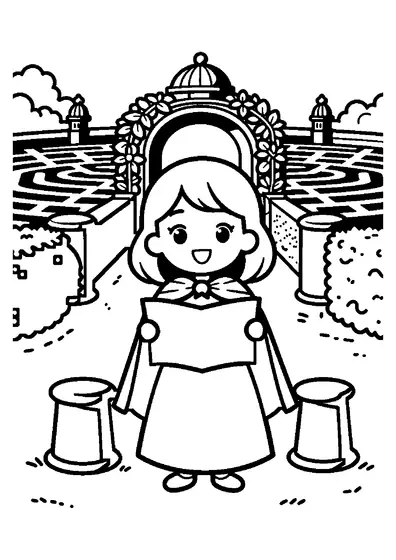
A smiling princess holding a water pitcher stands by a broad stone fountain in a courtyard enclosed by petal-shaped arches.

A4 format (landscape), black outlines on a white background · for home and classroom use
All coloring pages: Castle and Palace Coloring Pages
Similar coloring pages: Castle and Palace Coloring Pages


What else can you print? Free, no account needed
Custom Name Coloring Pages
Enter your child's name to generate a custom coloring page featuring large outline letters to color and decorate.
Open generator →Connect the Dots Generator
Eight connect-the-dots pictures across three difficulty levels. Features faint outline guides for younger children and dots only for older kids.
Open generator →Printables
Worksheets, tracing lines, mazes and dot-to-dots in A4.
Browse printables →
The Palace Courtyard Fountain
A smiling princess holds a pitcher beside a wide stone fountain in a secluded palace courtyard. Petal-shaped arches surround the open area, defining the architectural space around the central water feature.
Fascinating Facts About Courtyard Fountains
Courtyard fountains were constructed in historical palaces to provide clean running water, lower ambient air temperatures, and generate soothing water sounds. Gravity-fed plumbing systems moved water from higher reservoirs into lower basin spouts without relying on modern electrical pumps. Enclosed courtyards created sheltered outdoor spaces where royal residents could relax away from public view.
Real Colors of a Courtyard Fountain
- Fountain water: clear sky blue or light turquoise
- Stone fountain basin: light granite gray or warm limestone beige
- Petal-shaped archways: off-white marble or pale sandstone
- Water pitcher: polished copper, silver gray, or brass yellow
- Princess dress: rose pink, emerald green, or sunny yellow