
Castle by a Pond with Marsh Marigolds
A many-towered fairy-tale castle overlooks a broad pond dotted with floating leaves and marsh marigold flowers.

A4 format (landscape), black outlines on a white background · for home and classroom use
All coloring pages: Castle and Palace Coloring Pages
Similar coloring pages: Castle and Palace Coloring Pages


What else can you print? Free, no account needed
Custom Name Coloring Pages
Enter your child's name to generate a custom coloring page featuring large outline letters to color and decorate.
Open generator →Connect the Dots Generator
Eight connect-the-dots pictures across three difficulty levels. Features faint outline guides for younger children and dots only for older kids.
Open generator →Printables
Worksheets, tracing lines, mazes and dot-to-dots in A4.
Browse printables →
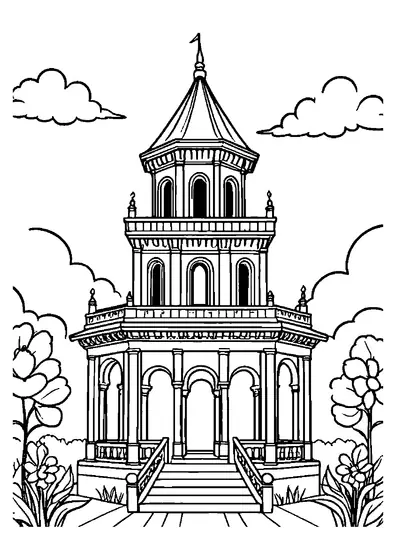
A castle beside a flower-filled pond
The large castle occupies the center of the scene, with numerous towers, steep roofs, small windows, and a main entrance gate. Across the pond are many floating water-lily leaves and marsh marigold flowers. Gentle hills, trees, and soft clouds extend behind the castle, giving the waterside stronghold a peaceful countryside setting.
Pond and wetland facts
Water-lily leaves float because their long flexible stalks connect them to roots anchored in the mud below. Marsh marigolds favor wet ground beside ponds, streams, and marshes; despite their common name, they are members of the buttercup family rather than true marigolds.
Real-world colors around the castle pond
- Castle walls: pale gray, warm beige, or brown when built from natural stone
- Tower roofs: slate gray, earthy red, or weathered green copper
- Water-lily leaves: fresh green to deep green, sometimes reddish underneath
- Marsh marigold flowers: bright golden yellow with green stems and leaves
- Hills, trees, and pond water: varied greens with water reflecting blue, gray, or surrounding scenery