
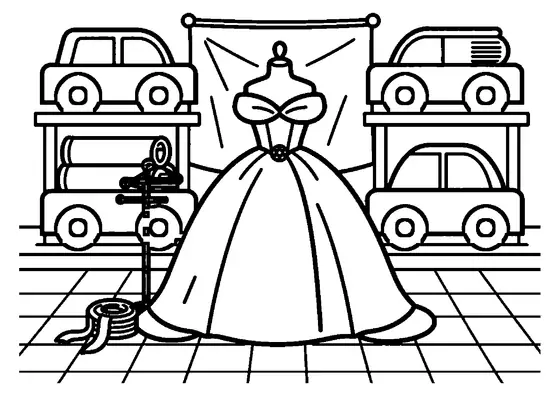
Ball Gown with a Lace Neckline in the Dressmaker’s Room
A palace sewing room displays a ball gown featuring a lace neckline mounted on a dressmaker form.

A4 format (landscape), black outlines on a white background · for home and classroom use
All coloring pages: Princess Coloring Pages
Similar coloring pages: Princess Coloring Pages


What else can you print? Free, no account needed
Custom Name Coloring Pages
Enter your child's name to generate a custom coloring page featuring large outline letters to color and decorate.
Open generator →Connect the Dots Generator
Eight connect-the-dots pictures across three difficulty levels. Features faint outline guides for younger children and dots only for older kids.
Open generator →Printables
Worksheets, tracing lines, mazes and dot-to-dots in A4.
Browse printables →
Ball Gown on a Dress Form in a Palace Sewing Room
A dressmaker room inside a palace holds a formal ball gown featuring a lace neckline, set upon a tailor dress form. Dedicated sewing rooms served as busy central hubs in royal households, where master tailors, lace makers, and seamstresses crafted, fitted, and maintained extensive court wardrobes.
Needlework and Historical Lace Production
Lace necklines were among the most expensive components of historical ball gowns due to the painstaking hand labor required to produce them. Bobbin lace and needle lace were crafted using extremely fine linen or silk threads twisted around tiny pins stuck into parchment patterns. A single yard of intricate court lace could take a skilled lacemaker hundreds of hours to complete, making lace trims prized family heirlooms passed down through generations.
Real Colors of Lace Necklines and Sewing Rooms
- Lace neckline trim: Delicate handmade lace is naturally unbleached off-white, ivory, linen beige, or pure bleached white.
- Ball gown fabric: Luxury court ball gowns utilized silk damask or brocade in royal blue, plum, golden yellow, or deep ruby red.
- Tailor mannequin fabric: Sewing room dress forms were upholstered in un-dyed cream canvas or tan linen cloth.
- Wooden sewing room furniture: Workshop tables, thread racks, and cutting benches were built from sturdy oak, beech, or pine wood.