
Mermaid on a Sunken Stone Pier
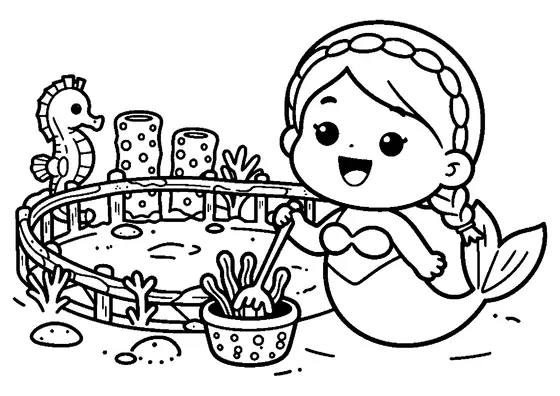
A submerged marine setting features a mermaid resting upon a sunken stone pier next to a woven basket.

A4 format (landscape), black outlines on a white background · for home and classroom use
All coloring pages: Mermaid Coloring Pages
Similar coloring pages: Mermaid Coloring Pages



What else can you print? Free, no account needed
Custom Name Coloring Pages
Enter your child's name to generate a custom coloring page featuring large outline letters to color and decorate.
Open generator →Connect the Dots Generator
Eight connect-the-dots pictures across three difficulty levels. Features faint outline guides for younger children and dots only for older kids.
Open generator →Printables
Worksheets, tracing lines, mazes and dot-to-dots in A4.
Browse printables →
Submerged Setting with a Mermaid and Woven Basket
Sunken piers represent former coastal structures that have become submerged over time due to rising sea levels or coastal erosion. Mermaids in myth and legend frequently visit these underwater stone ruins to rest near forgotten human items like woven baskets. Baskets submerged on the ocean floor reflect lost artifacts from maritime trade or fishing activities that settled into the quiet environment of the seabed.
The History and Science of Sunken Piers and Ocean Erosion
Coastal stone piers were historically built with heavy masonry to withstand powerful wave action and provide docking spots for ocean vessels. Over centuries, geological shifts, subsidence, and rising ocean waters cause coastal stone infrastructure to sink completely beneath the sea surface. Once submerged, stone piers become artificial habitats where marine life settles, covered gradually by algae and marine mineral deposits.
Natural Colors of Submerged Coastal Elements
- Mermaid tail: ocean green, turquoise, or sapphire blue tones
- Mermaid hair: dark chestnut brown, warm auburn, or golden yellow
- Sunken stone pier: slate gray, weathered brown, or moss green from algae
- Woven basket: natural straw yellow, dark oak brown, or tan fiber shades
- Ocean seabed: sandy gray, muted brown, or beige sediment