
Mermaid on a Sunken Observation Deck
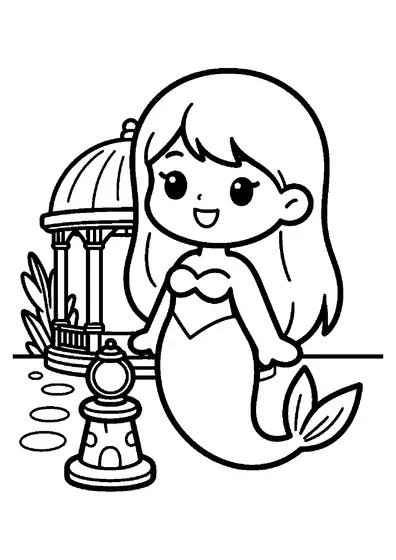
A mermaid with her hair tied in a high ponytail looks across the ocean from a stone observation deck.

A4 format (landscape), black outlines on a white background · for home and classroom use
All coloring pages: Mermaid Coloring Pages
Similar coloring pages: Mermaid Coloring Pages




What else can you print? Free, no account needed
Custom Name Coloring Pages
Enter your child's name to generate a custom coloring page featuring large outline letters to color and decorate.
Open generator →Connect the Dots Generator
Eight connect-the-dots pictures across three difficulty levels. Features faint outline guides for younger children and dots only for older kids.
Open generator →Printables
Worksheets, tracing lines, mazes and dot-to-dots in A4.
Browse printables →
Submerged Observation Decks and Nautical Instruments
Underwater exploration often involves specialized optical tools designed to view distant marine life. In this scene, a ponytail-wearing mermaid stands on a sunken stone observation platform while looking through a classical brass telescope. The stone deck provides a stable vantage point over the ocean depths, combining historic navigational instruments with sea folklore.
Historical Facts About Telescopes and Submerged Ruins
Refracting telescopes were first patented in the early seventeenth century for maritime navigation and astronomical observation. Traditional optical instruments use glass lenses set inside heavy brass tubes to magnify far away objects. Sunken stone structures across the globe are often ancient ruins submerged by rising sea levels or tectonic shifting over thousands of years.
Real Colors of Marine Stone and Brass
- Brass telescope: Polished golden yellow, tarnished bronze, or deep greenish patina caused by saltwater exposure.
- Sunken stone deck: Muted gray, charcoal, or weathered beige covered with patches of dark green sea moss.
- Mermaid hair: Natural human shades such as auburn, chestnut brown, golden blonde, or raven black.
- Ocean depths: Dark navy blue, indigo, or rich sapphire blue where sunlight gradually fades.
- Mermaid tail scales: Emerald green, sapphire blue, or shimmering purple with silver highlights.