
Mermaid Cleaning Shells Beside a Coral Tower
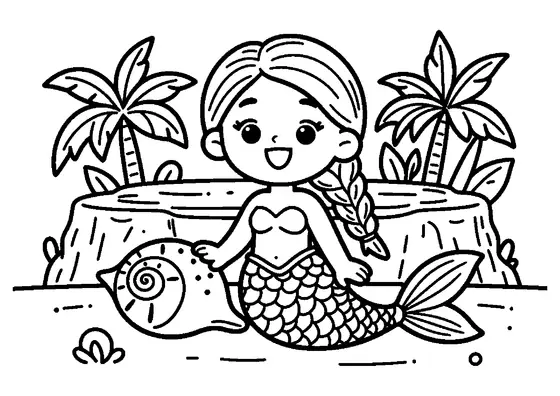
An ocean illustration features a mermaid taking care of sea shells near a tall coral formation.

A4 format (landscape), black outlines on a white background · for home and classroom use
All coloring pages: Mermaid Coloring Pages
Similar coloring pages: Mermaid Coloring Pages




What else can you print? Free, no account needed
Custom Name Coloring Pages
Enter your child's name to generate a custom coloring page featuring large outline letters to color and decorate.
Open generator →Connect the Dots Generator
Eight connect-the-dots pictures across three difficulty levels. Features faint outline guides for younger children and dots only for older kids.
Open generator →Printables
Worksheets, tracing lines, mazes and dot-to-dots in A4.
Browse printables →
Mermaid Caring for Seashells Near Coral
Under the sea, a mermaid gathers and cleans seashells near a towering coral spire. Nearby, a wooden bucket rests beside the coral structure as ocean water flows around the seafloor.
Coral Spires and Ocean Life
Coral towers are built over hundreds of years by millions of tiny marine organisms called coral polyps. These hard structures provide shelter for countless sea creatures and help protect coastal environments from strong ocean waves. Seashells found near reefs often belong to mollusks that shed their outer covers as they grow.
Real Colors of Ocean Life
- Mermaid tail: Iridescent shades of green, turquoise, or deep blue found in ocean water.
- Coral spire: Warm tones of orange, pink, or purple created by living coral polyps.
- Seashells: Creamy white, pale pink, or soft beige depending on the mollusk species.
- Wooden bucket: Natural brown or weathered gray wood tones.