
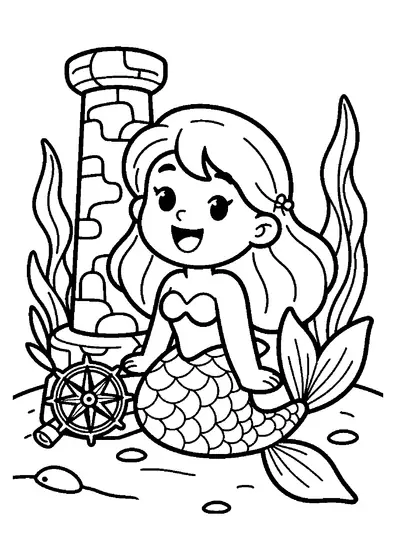
Mermaid by an Underwater Stone Palace Entrance
An ocean floor setting displays a mermaid swimming past the ornate stone gateway of an ancient submerged palace.

A4 format (portrait), black outlines on a white background · for home and classroom use
All coloring pages: Mermaid Coloring Pages
Similar coloring pages: Mermaid Coloring Pages





What else can you print? Free, no account needed
Custom Name Coloring Pages
Enter your child's name to generate a custom coloring page featuring large outline letters to color and decorate.
Open generator →Connect the Dots Generator
Eight connect-the-dots pictures across three difficulty levels. Features faint outline guides for younger children and dots only for older kids.
Open generator →Printables
Worksheets, tracing lines, mazes and dot-to-dots in A4.
Browse printables →
Ancient Sunken Architecture Beneath the Waves
An ornate stone entryway from a ruined underwater palace stands firmly on the seabed floor. A mermaid swims alongside the carved stone columns and archways of this submerged historical structure.
Submerged Coastal Ruins in World History
Historical cities and coastal palaces have ended up underwater due to rising sea levels, earthquakes, or coastal land subsidence over centuries. Submerged stone structures often become covered in marine algae, barnacles, and coral encrustations.
Natural Shades of Underwater Stone Ruins
- Carved palace stone columns: weathered gray, beige, or dark slate
- Marine algae growth on stone: forest green or olive brown
- Seabed sand around ruins: warm tan or pale cream
- Encrypted sea barnacles: off-white or dull grayish brown