
Giant Scallop Shell with a Starfish Inside
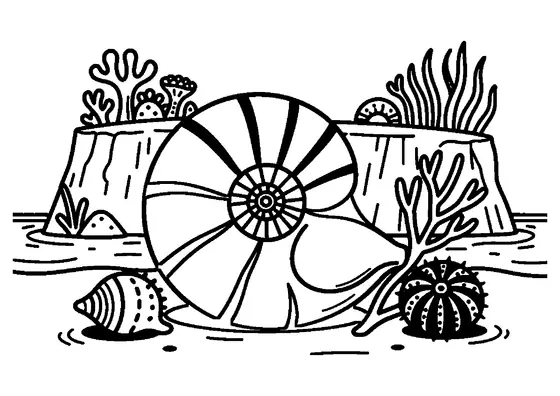
A starfish sits resting inside a large scallop shell along a sandy coral reef meadow.

A4 format (landscape), black outlines on a white background · for home and classroom use
All coloring pages: Mermaid Coloring Pages
Similar coloring pages: Mermaid Coloring Pages



What else can you print? Free, no account needed
Custom Name Coloring Pages
Enter your child's name to generate a custom coloring page featuring large outline letters to color and decorate.
Open generator →Connect the Dots Generator
Eight connect-the-dots pictures across three difficulty levels. Features faint outline guides for younger children and dots only for older kids.
Open generator →Printables
Worksheets, tracing lines, mazes and dot-to-dots in A4.
Browse printables →
Marine Life Scene with a Scallop Shell and Starfish
On the sandy sea floor within a coral meadow, a prominent scallop shell houses a starfish. Shells resting on ocean sediment provide temporary shelter and surfaces for small marine organisms living near coral reefs.
Remarkable Attributes of Starfish
Starfish possess hundreds of tiny tube feet on their undersides that operate using hydraulic water pressure. These tube feet allow starfish to crawl smoothly across ocean sand and grip surfaces firmly. If a starfish loses an arm to a predator, it has the ability to regenerate a replacement limb over time.
Colors of Scallop Shells and Sea Stars in Nature
- Starfish skin: bright orange, deep red, purple, or mottled tan
- Scallop shell outer layer: cream, brown, pink, or grayish-white
- Scallop shell inner lining: smooth pearl white or soft pink
- Coral meadow vegetation: green, olive, or purple-brown