
Warhorse by the Castle Wine Cellar
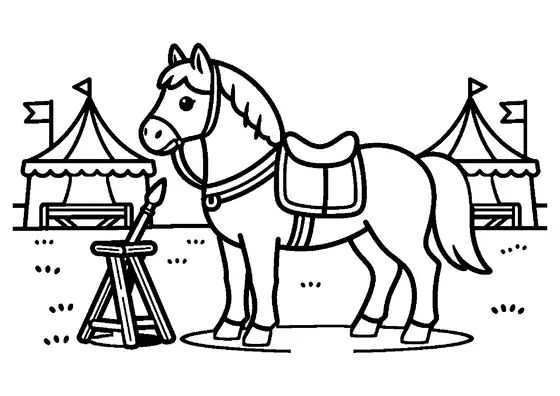
A warhorse with a flowing mane stands near wooden barrels and a saddle rack in a castle cellar.

A4 format (landscape), black outlines on a white background · for home and classroom use
All coloring pages: Knights and Castles Coloring Pages
Similar coloring pages: Knights and Castles Coloring Pages


What else can you print? Free, no account needed
Custom Name Coloring Pages
Enter your child's name to generate a custom coloring page featuring large outline letters to color and decorate.
Open generator →Connect the Dots Generator
Eight connect-the-dots pictures across three difficulty levels. Features faint outline guides for younger children and dots only for older kids.
Open generator →Printables
Worksheets, tracing lines, mazes and dot-to-dots in A4.
Browse printables →
A Noble Warhorse near Castle Cellar Barrels
A knight's warhorse stands near large wooden barrels and a saddle rack inside a cool castle cellar area. Castle basements were built deep underground to store barrelled liquids, preserved foods, and equestrian gear in cool, constant temperatures throughout the year.
The Training of Medieval Warhorses
Knights relied on powerful warhorses called destriers, bred specifically for strength, agility, and stamina. Training began early to ensure the horses remained calm around loud noises, heavy armor, and crowded castle courtyards.
True Colors of Warhorses and Storage Barrels
- Warhorse coat: rich chestnut brown, solid black, dapple gray, or bay
- Horse mane and tail: dark brown, blonde flaxen, or jet black
- Large storage barrels: natural oak wood with dark iron hoops
- Leather saddle rack: tan leather straps on sturdy pine framing