
Knight Watering Castle Plants
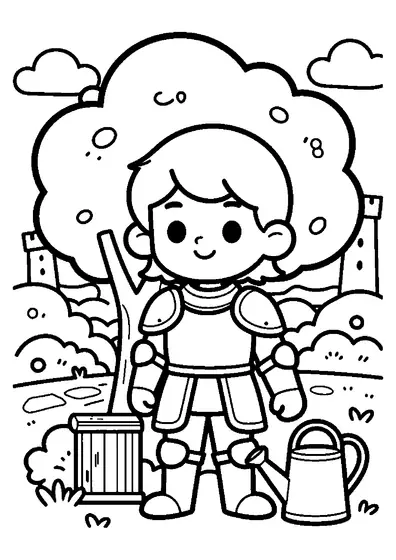
A cheerful knight stands in a castle garden beside a large watering can and a wooden box holding young seedlings.

A4 format (landscape), black outlines on a white background · for home and classroom use
All coloring pages: Knights and Castles Coloring Pages
Similar coloring pages: Knights and Castles Coloring Pages


What else can you print? Free, no account needed
Custom Name Coloring Pages
Enter your child's name to generate a custom coloring page featuring large outline letters to color and decorate.
Open generator →Connect the Dots Generator
Eight connect-the-dots pictures across three difficulty levels. Features faint outline guides for younger children and dots only for older kids.
Open generator →Printables
Worksheets, tracing lines, mazes and dot-to-dots in A4.
Browse printables →
Knight Tending to Seedlings in the Castle Garden
This garden scene depicts a knight caring for growing flora within a castle estate. The knight is positioned next to a large metal watering can and a wooden container filled with delicate young seedlings sprouted in cultivated soil.
Insights into Medieval Castle Gardens
Gardens within castle grounds provided fresh herbs, vegetables, and medicinal plants vital for sustaining fortress inhabitants during long periods. Water was carried manually from wells or cisterns using heavy metal or wooden buckets to ensure young crops survived summer heat. Growing plants in portable wooden boxes protected fragile sprouts before transplanting them into primary garden beds.
Real World Colors of Garden Gear
- Knight armor and tunic: Silver metal plates paired with deep crimson or navy fabric
- Watering can: Galvanized gray zinc or weathered tin
- Seedling box: Rustic brown pine or oak wood
- Young plant leaves: Tender bright green or yellowish green
- Cultivated soil: Rich dark brown or black earth