
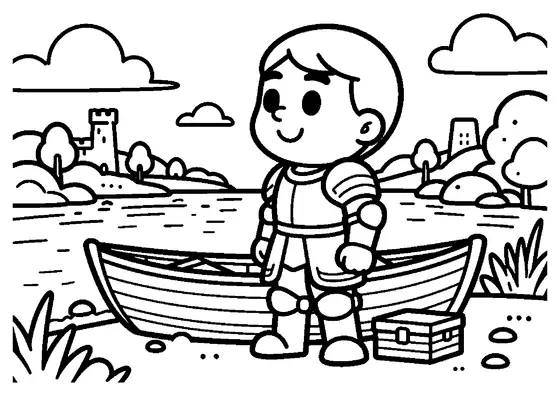
Knight Repairing a Garden Bridge
A cheerful knight stands near a small garden footbridge with a wooden mallet and a fresh plank, backed by distant castle towers.

A4 format (landscape), black outlines on a white background · for home and classroom use
All coloring pages: Knights and Castles Coloring Pages
Similar coloring pages: Knights and Castles Coloring Pages


What else can you print? Free, no account needed
Custom Name Coloring Pages
Enter your child's name to generate a custom coloring page featuring large outline letters to color and decorate.
Open generator →Connect the Dots Generator
Eight connect-the-dots pictures across three difficulty levels. Features faint outline guides for younger children and dots only for older kids.
Open generator →Printables
Worksheets, tracing lines, mazes and dot-to-dots in A4.
Browse printables →
Maintaining Small Footbridges in Castle Gardens
Footbridges spanning garden streams and small ponds require routine maintenance to replace worn planks and keep footpaths safe for walking. Bringing proper tools like heavy wooden mallets allows sturdy structural repairs without damaging surrounding garden beds.
Wooden Bridge Construction and Repair
Garden footbridges were typically constructed from durable woods such as oak or cedar, which resist rotting when exposed to water and damp ground. Craftsmen used wooden mallets to drive wooden pegs or snug planks into place without splitting the timber grain. Regular inspection of bridge deck boards ensured that rainwater drainage did not soften the underlying support beams over time.
Realistic Colors of Wooden Bridge Maintenance
- Wooden bridge planks: weathered gray-brown timber or freshly cut tan wood
- Construction mallet: hard dark brown oak wood
- Replacement plank: light tan or pale pine wood
- Knight armor: metallic steel gray with brass fittings
- Distant castle towers: pale stone gray against a light blue sky