
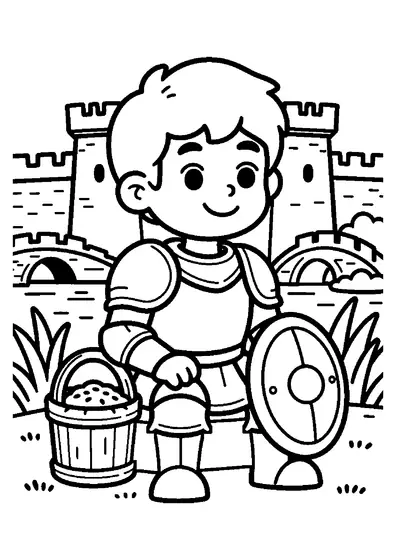
Knight in a castle courtyard beside a wooden chest
A knight stands in a spacious castle courtyard next to a protective shield and a wooden chest.

A4 format (portrait), black outlines on a white background · for home and classroom use
All coloring pages: Knights and Castles Coloring Pages
Similar coloring pages: Knights and Castles Coloring Pages



What else can you print? Free, no account needed
Custom Name Coloring Pages
Enter your child's name to generate a custom coloring page featuring large outline letters to color and decorate.
Open generator →Connect the Dots Generator
Eight connect-the-dots pictures across three difficulty levels. Features faint outline guides for younger children and dots only for older kids.
Open generator →Printables
Worksheets, tracing lines, mazes and dot-to-dots in A4.
Browse printables →
A Medieval Knight in a Fortress Courtyard
A smiling knight stands calmly inside the open courtyard of a stone castle. Positioned alongside a protective shield and a closed storage chest, the figure represents medieval defense and fortress life within historic stronghold grounds.
Historical Facts About Castle Courtyards and Armor
Medieval castle courtyards served as central hubs where blacksmiths repaired armor, horses were trained, and supplies were stored. Polished steel armor required regular maintenance with oil and sand to prevent rust caused by rain and humidity. Wooden chests were primary storage units in castles for carrying personal equipment, clothing, and valuable tools during travel.
Traditional Colors of Knight Armor and Castle Grounds
- Steel armor plates: shiny silver, metallic gray, or polished steel
- Heraldic shield design: deep blue, red, gold, or dark green
- Storage chest wood: rich brown, tan, or dark timber
- Castle courtyard stones: natural gray, beige, or weathered granite
- Knight tunic fabric: crimson, navy blue, or yellow