
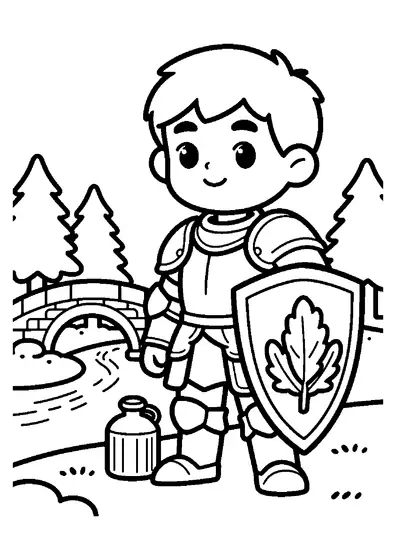
Knight Bringing a Warm Meal
A smiling knight visits a village cottage carrying a covered pot and basket filled with food.

A4 format (portrait), black outlines on a white background · for home and classroom use
All coloring pages: Knights and Castles Coloring Pages
Similar coloring pages: Knights and Castles Coloring Pages


What else can you print? Free, no account needed
Custom Name Coloring Pages
Enter your child's name to generate a custom coloring page featuring large outline letters to color and decorate.
Open generator →Connect the Dots Generator
Eight connect-the-dots pictures across three difficulty levels. Features faint outline guides for younger children and dots only for older kids.
Open generator →Printables
Worksheets, tracing lines, mazes and dot-to-dots in A4.
Browse printables →
Medieval Knight Delivering Food to a Village
A friendly knight stands outside a small cottage while bringing a warm meal to local villagers. A large covered pot and a woven basket sit nearby, while simple village structures form the background.
How Medieval Feasts and Meals Worked
In medieval times, noble households and knights often distributed excess food to local villagers during celebrations or difficult seasons. Pottage, a thick stew made from grains and vegetables, was a daily staple cooked in large iron pots over open hearths. Baskets were commonly woven from willow branches to carry bread and fresh produce across the village.
Real Colors of Knights and Village Life
- Iron pot: dark gray or black metal shade
- Woven basket: natural tan, beige, or light brown wood
- Cottage wall: plaster white, cream, or natural timber brown
- Medieval tunic: dyed blue, red, or natural unbleached wool