
The Little Match Girl Outside a Bakery
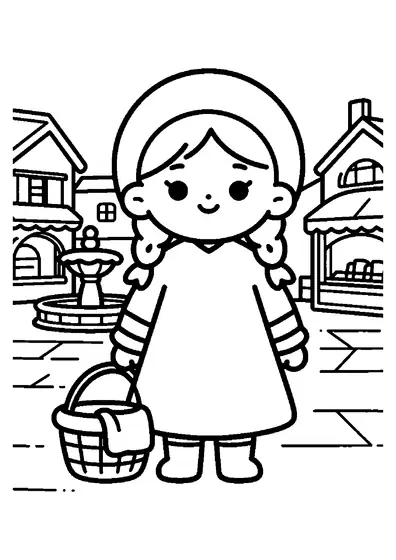
A cheerful fairy-tale girl holding a small basket pauses near the entrance of a traditional village bakery.

A4 format (landscape), black outlines on a white background · for home and classroom use
All coloring pages: Fairy Tale Coloring Pages
Similar coloring pages: Fairy Tale Coloring Pages



What else can you print? Free, no account needed
Custom Name Coloring Pages
Enter your child's name to generate a custom coloring page featuring large outline letters to color and decorate.
Open generator →Connect the Dots Generator
Eight connect-the-dots pictures across three difficulty levels. Features faint outline guides for younger children and dots only for older kids.
Open generator →Printables
Worksheets, tracing lines, mazes and dot-to-dots in A4.
Browse printables →
A Fairy-Tale Scene Outside a Village Bakery
This scene brings a gentle interpretation of the classic fairy tale into a bright bakery setting. A young girl carries a basket while standing near the bakery building. The surrounding view includes large wooden doors, an oven, and a cobblestone path running past the entrance.
How Traditional Bakeries Operated
In traditional European villages, community bakeries relied on large stone ovens that retained heat long after the fires died down. Bakers often lit their wood-fired ovens before dawn so that fresh bread was ready for morning travelers and local residents. The warm air escaping through the heavy doors made bakeries a natural gathering spot in cold weather.
Real Colors of a Country Bakery
- Woven basket: Light brown, tan, or golden straw
- Bakery doors: Dark brown stained wood or deep red paint
- Brick oven: Reddish-brown terracotta or gray stone
- Cobblestones: Shades of gray, charcoal, and muted slate