
The Little Match Girl in the Town Square
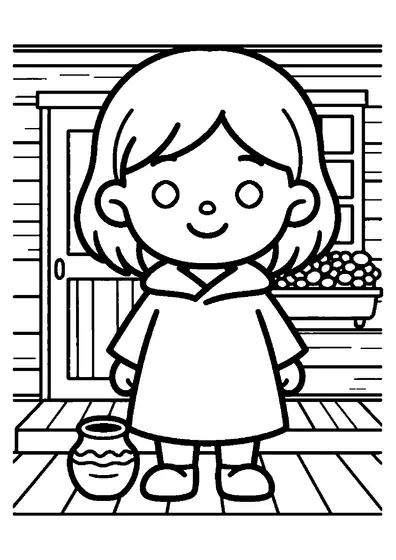
The Little Match Girl stands outdoors in a historic town square right next to a grand town hall building.

A4 format (portrait), black outlines on a white background · for home and classroom use
All coloring pages: Fairy Tale Coloring Pages
Similar coloring pages: Fairy Tale Coloring Pages




What else can you print? Free, no account needed
Custom Name Coloring Pages
Enter your child's name to generate a custom coloring page featuring large outline letters to color and decorate.
Open generator →Connect the Dots Generator
Eight connect-the-dots pictures across three difficulty levels. Features faint outline guides for younger children and dots only for older kids.
Open generator →Printables
Worksheets, tracing lines, mazes and dot-to-dots in A4.
Browse printables →
The Little Match Girl Beside a Historic Town Hall
The Little Match Girl stands within an open town square surrounded by historic civic architecture. Beside her rises the facade of an old town hall, set in a traditional urban square environment.
Historic Town Squares and Civic Architecture
European town squares historically functioned as the economic and social center of urban communities, featuring stone paving and grand municipal buildings. Town halls were typically constructed from durable sandstone or brick, showcasing decorative clock towers and large arched entryways. Matches in the nineteenth century were sold individually or in small wooden boxes by street peddlers.
Realistic Colors of Historic Square Architecture
- Cobblestone square pavement: charcoal gray or damp slate stone
- Town hall exterior walls: warm reddish brick or beige sandstone
- Historic wooden doors: dark walnut brown
- Matchsticks: natural pine wood with dark brown or red tips