
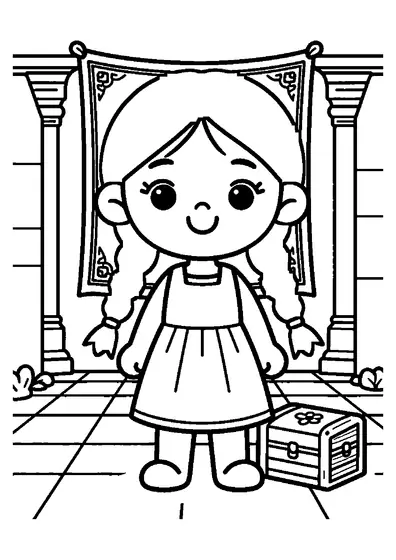
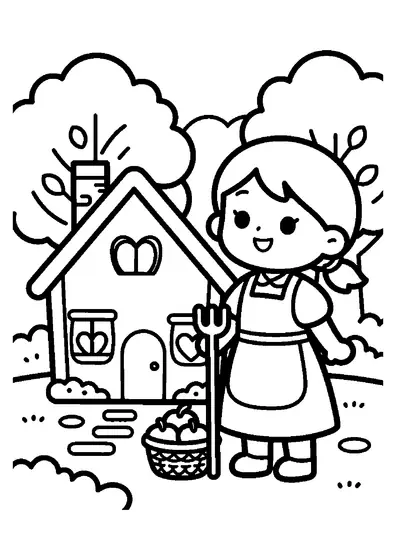
Rapunzel by the Castle’s Double Doors
Rapunzel stands outside the grand palace entrance holding yarn as her long hair flows beside her.

A4 format (portrait), black outlines on a white background · for home and classroom use
All coloring pages: Fairy Tale Coloring Pages
Similar coloring pages: Fairy Tale Coloring Pages




What else can you print? Free, no account needed
Custom Name Coloring Pages
Enter your child's name to generate a custom coloring page featuring large outline letters to color and decorate.
Open generator →Connect the Dots Generator
Eight connect-the-dots pictures across three difficulty levels. Features faint outline guides for younger children and dots only for older kids.
Open generator →Printables
Worksheets, tracing lines, mazes and dot-to-dots in A4.
Browse printables →
Rapunzel at the Castle Entrance
Rapunzel is a classic fairy tale figure known for her extraordinarily long hair. In this fairytale scene, she carries a basket of yarn near the heavy wooden doors of a castle. The entryway of a medieval palace serves as a dramatic backdrop to her quiet task.
The Tradition of Spinning and Yarn in Folklore
Textiles and yarn play a central role in traditional European folk stories, often symbolizing patience and destiny. Spinning wheels and wool craft were common household tasks in medieval strongholds, where thread had to be spun by hand before weaving.
Colors of Rapunzel and Medieval Castles
- Rapunzel's hair: golden yellow or bright blonde
- Basket: warm brown woven willow
- Yarn: soft white, cream, or pastel wool
- Castle doors: dark oak wood with iron metal fittings
- Stone walls: light beige or granite gray